 Login


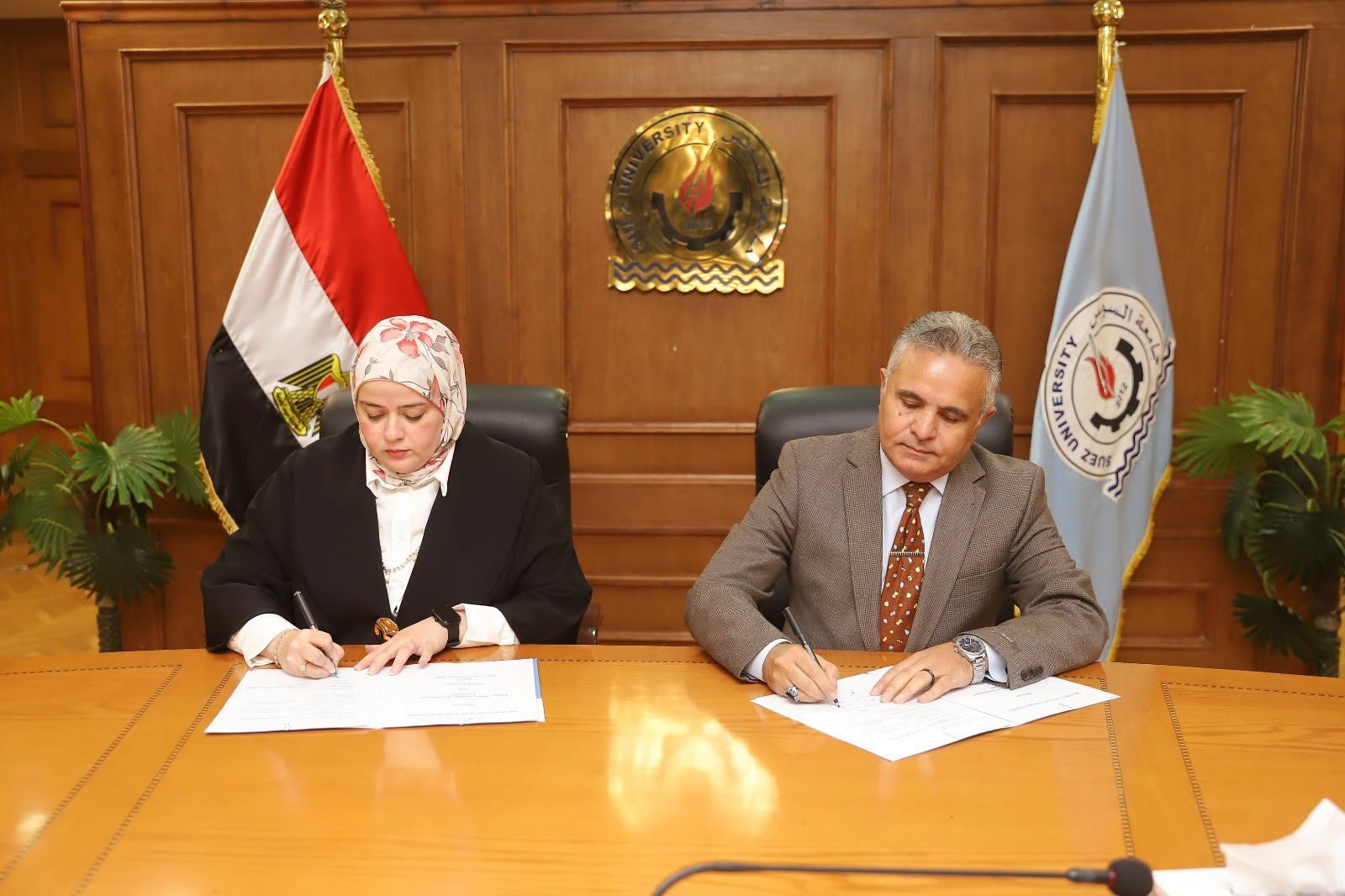
As part of Suez University’s ongoing efforts to strengthen partnerships with major industrial and investment institutions, the university witnessed the signing of a cooperation protocol with TEDA Egypt for the Development of the Special Economic Zone. The protocol aims to promote integration between academic education and practical application and to prepare qualified human resources in line with labor-market needs and the requirements of sustainable development.
The protocol was signed on behalf of Suez University by Prof. Dr. Ashraf Heneigal, President of the University, and on behalf of TEDA Egypt by Ms. Nahla Emad, Executive Director of the Company. The signing ceremony was attended by Prof. Dr. Osama Qadour, Acting Vice President of the University for Community Service and Environmental Development Affairs, and Prof. Dr. Rania Shamaa, Dean of the Faculty of Commerce and Director of the University’s International Cooperation Office.
This cooperation builds on the pivotal role played by TEDA Egypt as the leading industrial and logistics developer within the Suez Canal Economic Zone, drawing on more than twenty years of experience in supporting industrial investment, particularly Egyptian-Chinese investments. It also reflects Suez University’s distinguished academic standing and its diverse range of faculties and specialized programs in commerce, science, engineering, and other disciplines relevant to development needs.
The protocol establishes a strategic framework for cooperation between the two parties to develop human capital, enhance vocational training, and exchange expertise and knowledge. These efforts are intended to help prepare a new generation of qualified graduates capable of meeting the growing needs of industrial and investment projects within the Suez Canal Economic Zone, in line with the objectives of Egypt Vision 2030.
The protocol covers several important areas of cooperation, including the development of vocational training programs and specialized technical workshops that address the actual needs of industrial companies operating in the zone. It also provides opportunities for practical training and apprenticeships for university students and graduates within companies operating under TEDA, in addition to cooperation in developing academic curricula to ensure their alignment with modern industrial developments and labor-market requirements.
The cooperation also includes exploring and implementing joint research projects in the fields of logistics, supply chain management, and fisheries sciences, as well as exchanging data and information related to workforce needs and training programs. These efforts are expected to contribute to enhancing the efficiency of the economic development system at the regional level.
The President of Suez University emphasized that the protocol represents a practical model of effective partnership between the university and the industrial sector. He noted that the university is continuously seeking to build strong partnerships with major economic and investment institutions in order to provide its students and graduates with genuine training and professional development opportunities.