 Login


Madbouly: Reviewing the achievements made does not mean that the state has succeeded in resolving all problems or that conditions have become ideal; however, the reality is that there are still a great many challenges that require further effort and work
The Prime Minister congratulates the residents of Suez Governorate on their national holiday and emphasises: ‘The residents of Suez set a national example of courage, valour and resistance during the glorious October War.”
We are keen to carry out field visits to the governorates every week, or at most every two weeks, to inaugurate and inspect development and service projects.
The projects the state is implementing are part of the national project adopted by His Excellency the President to develop Egypt and build the New Republic.
I am delighted with the opening of the first phase of Suez University Hospital, which has a capacity of around 110 beds.
The state has made significant efforts over the past 12 years to develop medical services across the various governorates following decades of challenges and accumulated problems.
In the past, patients were forced to travel from Suez to Cairo or Ismailia to undergo simple medical endoscopies because the service was not available in the governorate.
We do not claim to have succeeded in resolving all the problems… and we still face numerous challenges that require further work, effort, and patience.
Comprehensive development cannot be achieved in 10 or 12 years… and what matters most is the sustainability of development efforts until Egypt reaches the status we all dream of.
The Egypt 2026 Forum aimed to open the floor for dialogue and discussion, and to inform citizens – particularly the youth– of the scale of the challenges, what has been achieved since 2014, and the priorities for the coming phase.
We recognise the scale of the economic burdens borne by citizens and their inherent right to an improvement in their living conditions
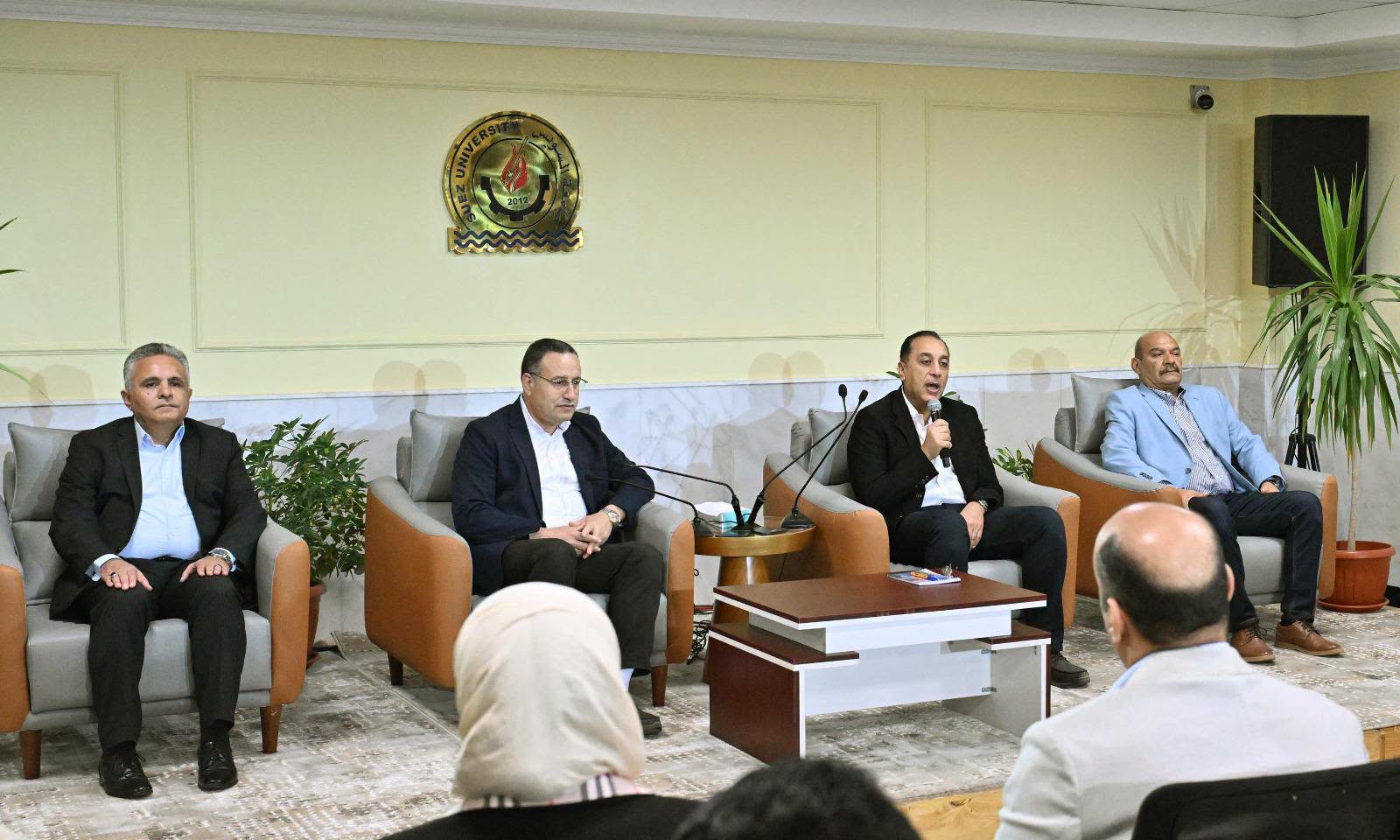
Moreover, Dr Mostafa Madbouly, Prime Minister, met today with several university students in Suez Governorate for a friendly discussion to hear their views on various issues of concern to university students, and their concerns regarding various issues. The meeting was also attended by Dr Abdulaziz Qanswa, Minister of Higher Education and Scientific Research and Acting Minister of Culture; Major General Staff of War/ Hani Rashad, Governor of Suez; and Dr Ashraf Hanijal, President of Suez University.
At the start of the meeting, the Minister of Higher Education and Scientific Research welcomed the Prime Minister and commended his inauguration of the first phase of Suez University Hospital, which has a capacity of approximately 110 beds. The event was attended by several ministers, the Governor of Suez, the President of Suez University, several officials, and members of the university’s medical staff.
Meanwhile, Dr Mustafa Madbouly, the Prime Minister, began his address during a meeting with several university students in Suez Governorate by expressing his delight at being in the governorate, offering his sincere congratulations to the residents of Suez and its Governor on the governorate’s National Day, which falls on 24 October each year.
Therefore, the Prime Minister emphasised the importance of familiarising new generations – particularly the youth of Suez Governorate – with the historical and national significance of this day, and the heroic deeds carried out by the residents of the governorate during the glorious October War of 1973. He also noted that the residents of Suez repelled the enemy’s attempts to storm and enter the city, and displayed the utmost courage, valour and resistance in defence of their city and to preserve the victory achieved by the Egyptian state.
On one hand, Dr Mustafa Madbouly explained that, during the glorious October War, Egypt managed to achieve a great victory on the ground, which had a profound impact on changing the course of Egyptian history. On the other hand, he emphasised that the Egyptian state had succeeded, following its victory in the military campaign, in waging the battle for peace and regaining full control of the Sinai Peninsula. He also noted that the residents of Suez have always been a model of courage, valour and bravery, reiterating his congratulations to the residents of the governorate on the occasion of their National Day, and expressing his appreciation and pride in the patriotic stances taken by the people of Suez throughout Egypt’s history.
Hence, Dr Mostafa Madbouly went on to discuss his current visit to the governorate of Suez, explaining that it involved inspecting a large number of projects being implemented by the state, as part of the government’s commitment to continuous on-the-ground monitoring of development and service projects across the various governorates, He emphasized his constant commitment, in cooperation with his fellow ministers, to undertaking regular field visits to the various governorates of the Republic, at a rate of one visit every week or every two weeks at most; to inaugurate new projects or inspect several projects currently under implementation, and assessing the achievements made on the ground.
Dr Mostafa Madbouly then added that these tours form part of the follow-up on projects implemented by the Egyptian state during the previous phase, as part of the national project adopted by His Excellency President Abdel Fattah El-Sisi, President of the Republic, to develop Egypt and build the ‘New Republic’.
Speaking about improvements in the standard of services provided to citizens, the Prime Minister touched upon the healthcare system in Suez Governorate, noting the importance of comparing what these services were like in previous years with what they are like today. In this regard, he explained that he had spoken to one of the doctors who had witnessed earlier stages of healthcare provision in the governorate, with the aim of understanding the nature of the medical services that were available to citizens and the standard of care provided during those periods.
In this context, the Prime Minister noted that he was keen to reconstruct a picture of the standard of medical care available in Suez Governorate some 20 or 25 years ago and to compare it with the situation in recent years, to gauge the extent of the progress made in the governorate’s healthcare system, adding that he had asked the doctor about the standard of medical services previously available and how medical conditions requiring treatment and diagnostic tests were managed, as a prelude to reviewing the progress the system has made in recent years.
Building on his remarks during the opening of the first phase of Suez University Hospital, Dr Mostafa Madbouly, Prime Minister, outlined the extent of the progress made by Egypt’s medical services system in recent years. He emphasised that the Egyptian state has made considerable efforts over the past 12 years to improve the services provided to citizens across various governorates, noting that Suez Governorate was not an exceptional case, but rather reflected the reality of medical services in many of the country’s governorates.
Dr Mustafa Madbouly added that he had asked the doctor to recount his experience regarding improvements in the standard of medical services, and how he used to deal with medical cases requiring procedures or tests, explaining that the doctor had assured him with the utmost transparency that, in the past, when he received a patient requiring an endoscopy—rather than a surgical procedure— he would be forced to refer them to Cairo or Ismailia, where hospitals offering this service were located. The doctor also spoke with complete transparency about the extent of the suffering endured by some patients due to the unavailability of the required medical services within the governorate, explaining that in some cases a patient would be suffering from bleeding that required an endoscopy, but the lack of this service meant they were forced to travel to another governorate, with the risk that the patient might die during the journey due to the absence of the necessary medical care in Suez.
Dr Mustafa Madbouly emphasised that this situation was not confined to Suez Governorate, but was a reality faced by a great many governorates across the country, where comprehensive medical services were not available in various governorates, with some areas offering only limited medical interventions. He added that reliance on advanced medical services was concentrated primarily in the major cities, foremost among them Cairo, Alexandria and Assiut, as these were the cities where medical services were available that were not accessible in many other governorates.
In this context, Dr Mustafa Madbouly emphasised that he was outlining these facts to illustrate the scale of the effort expended by the Egyptian state over the past 12 years, stressing that the progress achieved across various sectors, including the health sector, was the result of considerable work and effort.
The Prime Minister said that his remarks on these efforts were not made in his current capacity as Head of Government but rather based on his personal experience of the situation in Egypt at various points in time. He explained that he had witnessed the country’s circumstances since graduating and first became aware of the nature of the situation and the challenges it faced. He can compare what Egypt was like in the past with what it has become today, emphasising that his review of the achievements made does not mean that the state has succeeded in resolving all problems or that conditions have become ideal; rather, the reality indicates that there are still a great many challenges that require further effort and work.
Therefore, the Prime Minister explained that the Egyptian state has faced a significant accumulation of problems and challenges spanning many decades, and that it is not possible to address all their consequences in just 10 or 12 years. He emphasised that tackling these challenges requires continued work, effort and patience, alongside a shared belief that any project aimed at developing a nation requires a sustained period of unceasing work and effort, until the state can reach the status to which its people aspire.
In the course of his remarks, the Prime Minister expressed his hope that those present had followed the proceedings of the ‘Egypt 2026 Forum’, which concluded a few days ago, noting that the forum’s closing session was held last Saturday, and that the primary objective of organizing the forum, in accordance with the directives of His Excellency President Abdel Fattah El-Sisi, President of the Republic, was to open the way for dialogue and discussion on the various issues and challenges facing the Egyptian state, thereby enabling citizens, and the youth in particular, to gain a deeper understanding of the reality of the situation in their country.
The Prime Minister added that the forum aimed to raise public awareness of the scale of the challenges facing the country, to outline the situation in 2014 – when Egypt embarked on its path of reconstruction and development – and to highlight what has been achieved since then, as well as to review the remaining challenges and the priorities for the coming phase. He also pointed out that the development process in any country cannot be completed within 10 or 12 years, and that for Egypt to join the ranks of developed nations and realise the vision that Egyptians aspire to for their country, it will require a longer timeframe than the years that have passed. He emphasised that the most important element in this journey is the sustainability of the development process, and the uninterrupted continuation of efforts, thereby ensuring that we build on past achievements and make further progress in the years to come.
As well, Dr Mostafa Madbouly affirmed his full awareness of the scale of the challenges facing the Egyptian state, noting that those who followed the forum’s proceedings—including its presentations, sessions and discussions—had been privy to the views expressed by citizens regarding the current economic situation. He explained, in this light, that some citizens had spoken of feeling weary because of the difficult economic conditions and the country’s extensive experience of economic reform, emphasising that the current circumstances do indeed represent a challenge for citizens.
Dr Mostafa Madbouly added that it is entirely natural for citizens to feel the economic strain, to speak out about the problems and challenges affecting their daily lives, and to look forward to an improvement in their economic situation and living conditions; and that citizens may well notice a significant improvement in the standard of some of the services provided to them, and witness the scale of development the country is undergoing; yet, at the same time, they remain concerned about improving their income and economic circumstances, so that they can provide a better life for themselves and their children. He emphasised that this aspiration is entirely natural and a fundamental right of every citizen, stressing that every citizen has the right to hope for an improvement in their economic circumstances and for their children to enjoy a better standard of living.
At the same time, the Prime Minister explained that the primary aim of the discussions he is holding with citizens, whether during field visits or through the events of the Egypt 2026 Forum, is to foster a shared understanding of the reality of the circumstances and challenges facing the Egyptian state. He emphasised the importance of everyone being aware of what is happening in their country, the development achievements that have been made, and the challenges that remain, given that this awareness forms the basis for understanding the nature of the current phase and the requirements for continuing the process of construction and development.
During his meeting with several university students in the Suez Governorate, Dr Mustafa Madbouly, Prime Minister, emphasised that the key message from His Excellency President Abdel Fattah El-Sisi, President of the Republic, to Egyptian youth and all citizens is the need to safeguard the nation, saying: “Protect your country, protect your country, take care of your country,” emphasising the importance of recognising the scale of the challenges the Egyptian state has faced, and the dangers that could have threatened its stability and future.
The Prime Minister explained that the Egyptian state has gone through extremely difficult circumstances, and that preserving its stability is a shared responsibility, warning that if any country is exposed to serious unrest, it could lead to the collapse of its institutions, and restoring stability might prove extremely difficult.
Moreover, Dr Mostafa Madbouly addressed the university students taking part in the meeting, noting that most of them were still at university and aged between 18 and 22, which meant they had been children during the events of the 25 January 2011 Revolution, and were not fully aware of the nature of the events and developments the country was witnessing at the time; nor were they perhaps fully aware of the reality of the situation Egypt was going through until 2014.
The Prime Minister noted that the three years following the events of 2011 were marked by extremely harsh conditions and a state of severe turmoil, which nearly exposed the Egyptian state to grave dangers, given the scale of the unrest, problems and terrorist, security and economic challenges facing the country. He added that the economic challenges faced by the state were, in themselves, one of the factors that contributed to the outbreak of the events of 2011, alongside other challenges, emphasising that Egypt’s ability to overcome this phase and restore stability was a great blessing from Allah Almighty.
The Prime Minister called on university students to reflect on the situations in several neighbouring countries in the region, which have witnessed events and unrest similar to those of 2011 and have not yet been able to restore stability, urging them to consider the circumstances these countries are currently facing and to recognise the importance of preserving the security and stability of the Egyptian state.
In this context, Dr Mostafa Madbouly emphasised that his commitment to meeting university students stems from the importance of direct communication with them, explaining that, during his forthcoming field visits to various governorates, he will ensure that similar opportunities for dialogue with young people are provided, adding that whilst there may have been some shortcomings in organising such meetings during previous field visits, it is of the utmost importance to make the most of future visits by arranging face-to-face meetings with university students and the youth, alongside other events that facilitate the exchange of views, the raising of questions and the discussion of various issues.
Dr Mostafa Madbouly explained that the primary aim of these meetings is to raise the youth’s awareness of what Egypt has experienced in recent years, and the challenges it has faced and continues to face – both domestically and internationally – as well as to familiarise them with the state’s aspirations and the plans it is working to implement in the coming period.
Therefore, the Prime Minister emphasised that fostering a genuine awareness amongst the youth of the scale of the challenges and achievements is of the utmost importance, noting that successful development experiences in various countries around the world confirm that achieving economic and social progress requires many years of continuous effort. He pointed out that everyone today looks to the experiences of East Asian countries and other nations that have achieved significant developmental successes and looks forward to Egypt reaching similar levels of progress, emphasizing that this aspiration is truly a shared endeavour for all Egyptians. Furthermore, a study of these countries’ development experiences reveals that the progress they have achieved was not realized in just a few years, but rather took a long time – in some cases no less than 20 or 25 years, and in others as long as 50 or 60 years – before these countries were able to reach advanced levels of economic strength and development.
Dr Mostafa Madbouly added that these experiences involved a great deal of effort, hardship, hard work and sacrifice, as well as perseverance and determination in implementing development plans. He emphasised that looking at the outcome of what these countries have achieved without recognizing the scale of the effort that preceded it does not reflect the reality of the development journey they have undergone.
The Prime Minister emphasised that Egyptian youth have every right to aspire to see their country ranked amongst the developed nations; however, achieving this goal requires studying the experiences of successful countries, understanding the scale of the work and effort they have expended, and recognising the sustainability of their development plans and their determination to continue implementing them until they reached their current status.
Dr Mostafa Madbouly emphasised that the aim of his conversation with university students was not to prolong the discussion, but rather to listen to them and respond to their various questions, whilst also clarifying certain facts relating to the circumstances the Egyptian state has gone through and the challenges it faces.
In this context, the Prime Minister touched upon the events of the ‘Egypt 2026 Forum’, explaining that one of the forum’s most important objectives was to explain the reality of the Egyptian state’s current situation to all citizens, to highlight the progress the country has made, the foundations upon which it is built, and the scale of the efforts made over the past 12 years.
As well, Dr Mostafa Madbouly highlighted the importance of posing a fundamental question regarding what the situation in Egypt might be today had the projects and reforms implemented over recent years not taken place. He also emphasised that assessing the scale of these achievements must be based on comparing the current reality with past conditions, and what the country might have become in the absence of those efforts. He cited the developments in the medical and healthcare system as an example, explaining that the progress made in this sector exemplifies the efforts the state has made over recent years.
Dr Mustafa Madbouly emphasised that this development does not mean that health services have reached perfection or achieved 100 per cent of their targets, noting the need to recognise the starting point from which the state began and the extent of the progress made compared with previous conditions. He pointed out that reaching an advanced level in any sector represents a positive achievement, but it does not mean that the path of development has come to an end, as there remain further steps to be taken. He emphasised that the most important thing is to stay on the right track and continue working to achieve the targets.
Dr Mostafa Madbouly added that, Insha’Allah, the Egyptian state will be able to achieve what it aspires to, provided there is the will, determination, effort and resolve to continue the march of construction and development. As well, he noted that what has been achieved in the health sector is merely one example among many sectors that have witnessed significant development efforts, pointing out that Suez Governorate itself reflects an aspect of these efforts, particularly with regard to the development of old residential areas and neighbourhoods.
Dr Mostafa Madbouly explained that he is fully aware of the situation in Suez Governorate and is in constant contact with the relevant governors regarding the problems and challenges it faces, including the condition of the old residential neighbourhoods built during the 1960s and 1970s, which require redevelopment and upgrading.
The Prime Minister noted that the state has already begun implementing development projects in large parts of these areas, which had been facing difficult conditions in recent years, and that there are still some areas where development has not yet reached, whilst work is currently underway to develop others.
In addition, Dr Mostafa Madbouly emphasised his awareness that citizens living in areas not yet covered by development projects continue to look forward to improvements in services and living conditions, stressing that the state is continuing to implement its development plans and that these efforts represent an ongoing process aimed at raising the standard of living across all regions.
The Prime Minister went on to discuss the importance of the youyh and their future, noting that they are among the Egyptian state’s foremost priorities for the coming period. He emphasised that the focus on the youth is not limited to improving services but extends to providing as many suitable employment opportunities for them as possible, as well as improving the education system. He stressed the importance of continuing to develop education at all levels, ensuring it keeps pace with the latest developments and changes in the labour market, and helping to prepare and equip young people to meet the demands of new jobs and professions.
Furthermore, the Prime Minister noted that the rapid developments in the labour market necessitate the continuous modernisation of the education system, enabling new generations to acquire the skills and knowledge that will allow them to compete and capitalise on the opportunities available in the coming period.
During a meeting with several university students in Suez Governorate, Dr Mustafa Madbouly, Prime Minister, emphasised that the nature of the labour market and employment has undergone radical changes in recent years, and is now completely different from what it was 20 or 30 years ago. This requires the younger generations to be familiar with modern technologies and advanced sciences, and to acquire skills and knowledge that were not required to the same extent as previous generations during their university studies.
Therefore, the Prime Minister explained that, in the past, university students would choose a specific career path and specialise in it, whereas the demands of the labour market today have become more diverse and interlinked. He pointed to the growing importance of what are known as ‘interdisciplinary sciences’, which are based on the integration of different scientific disciplines. Then, he added that for a student studying engineering or medicine, for example, it is no longer sufficient to be familiar only with their academic specialism; rather, it has become essential for them to know computer science, certain economic aspects and other relevant fields, given the nature of modern jobs, which now require a range of skills and knowledge.
The Prime Minister reiterated that the Egyptian state is continuing on its path of reform and development, emphasising that the primary aim of these efforts is to enable the youth and the younger generations to witness the progress and improvements taking place in their country, and to recognise the scale of development being achieved across various sectors.
Hence, Dr Mostafa Madbouly highlighted the importance of the youth being fully aware of the circumstances the Egyptian state faced between 2011 and 2014, when the process of reconstruction and development began, emphasising that the state did not embark on this journey under normal or stable conditions, but rather faced exceptional challenges and extremely difficult circumstances. He explained that Egypt was at that time going through a period marked by numerous revolutions and upheavals, resulting from accumulated problems spanning 30, 40 and 50 years, which had led citizens during that period to demand change in the country’s situation.
As well, Dr Mustafa Madbouly emphasised that understanding the nature of these circumstances is essential for assessing the achievements made, noting that construction, development and modernisation projects, by their very nature, require long periods of time, and that problems and issues that have accumulated over 50 years cannot be resolved in just five, six or seven years. He expressed his confidence that, inshallah, Egypt will be able to make further progress in the coming years, provided that work continues and there is a determination to complete the process of reform and development, which will have a positive impact on the future of young people and coming generations.
In conclusion, Dr Mostafa Madbouly emphasised his keenness to give the university students participating in the meeting the opportunity to raise their questions and queries, noting that the primary aim of the meeting was to listen to the youth and engage with them directly. He encouraged the students to ask any questions they might have and emphasised his readiness, alongside the ministers and officials participating in the meeting, to respond to the various questions and enquiries raised by the youth.