 Login


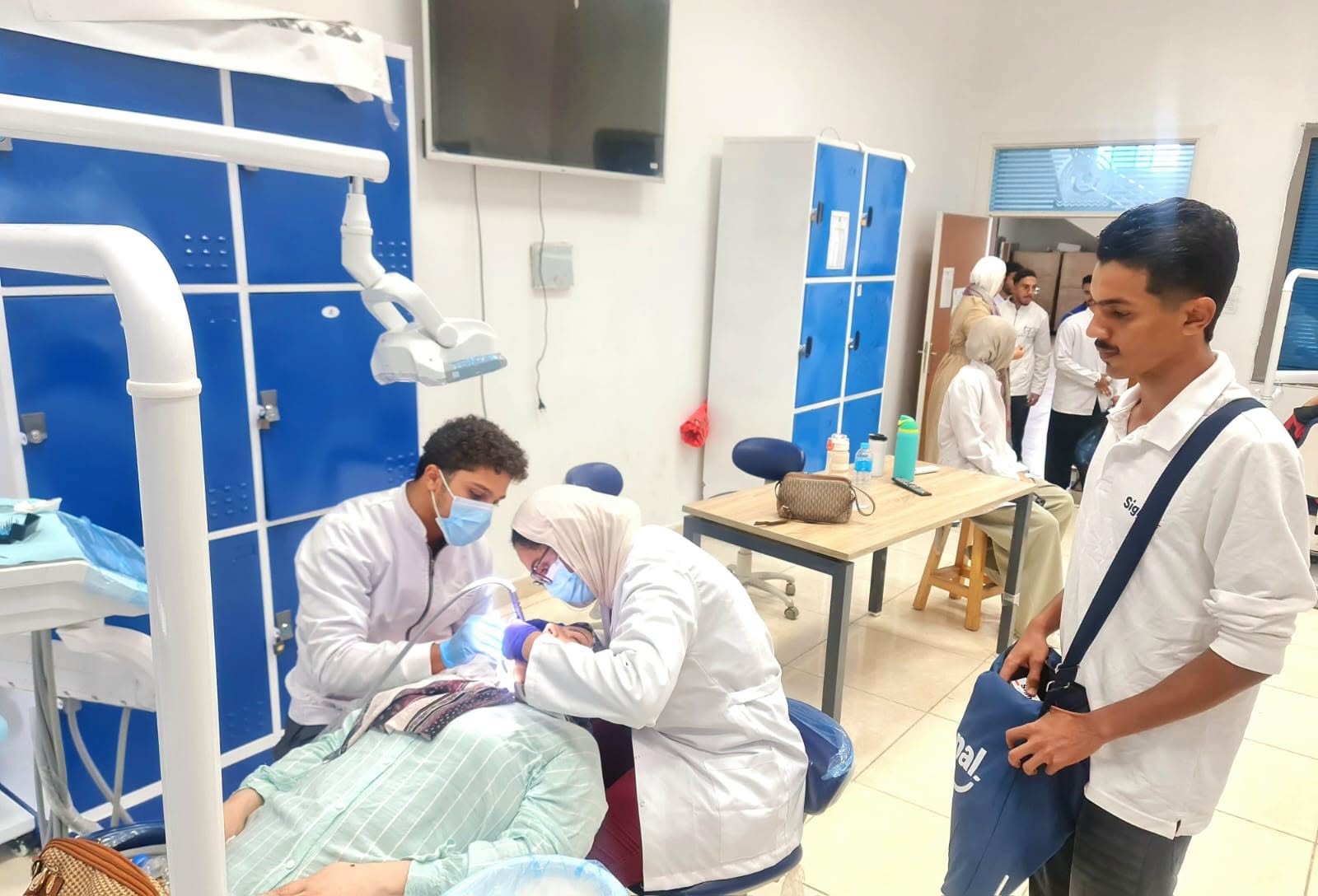
As part of Suez University’s community service mission and its plan to support the healthcare services provided to members of the local community, and under the patronage of Prof. Dr. Ashraf Heneigal, President of Suez University, and under the supervision of Prof. Dr. Osama Kaddour, Acting Vice President of the University for Community Service and Environmental Development, and Prof. Dr. Shatha Hammad, Dean of the Faculty of Oral and Dental Medicine, the Faculty of Oral and Dental Medicine organized a medical caravan at Suez University Hospital.
The medical caravan witnessed a strong turnout from citizens, with medical examinations, treatment services, and health awareness activities provided to approximately 250 beneficiaries. These services were delivered by a distinguished group of faculty members, assistant teaching staff, and students of the Faculty, as part of the University’s commitment to expanding the reach of its healthcare and community services and serving the largest possible number of beneficiaries.
The caravan is part of a series of activities and initiatives undertaken by Suez University to reaffirm its developmental and community-oriented role and its commitment to active participation in improving the quality of healthcare and serving the surrounding community.
Prof. Dr. Ashraf Heneigal, President of Suez University, emphasized that community service is among the University’s top priorities and that the University continually seeks to harness its academic, scientific, and human resources to serve citizens. He noted that medical caravans represent one of the most important forms of integration between the University’s academic and community roles, contributing to the promotion of health awareness and the provision of medical services to those in need.
For her part, Prof. Dr. Shatha Hammad, Dean of the Faculty of Oral and Dental Medicine, explained that the caravan reflects the Faculty’s commitment to fulfilling its community mission alongside its educational and research missions. She emphasized that the participation of faculty members and students in such activities contributes to developing their professional skills and strengthening their sense of social responsibility, while also providing high-quality treatment services to beneficiaries.