 Login


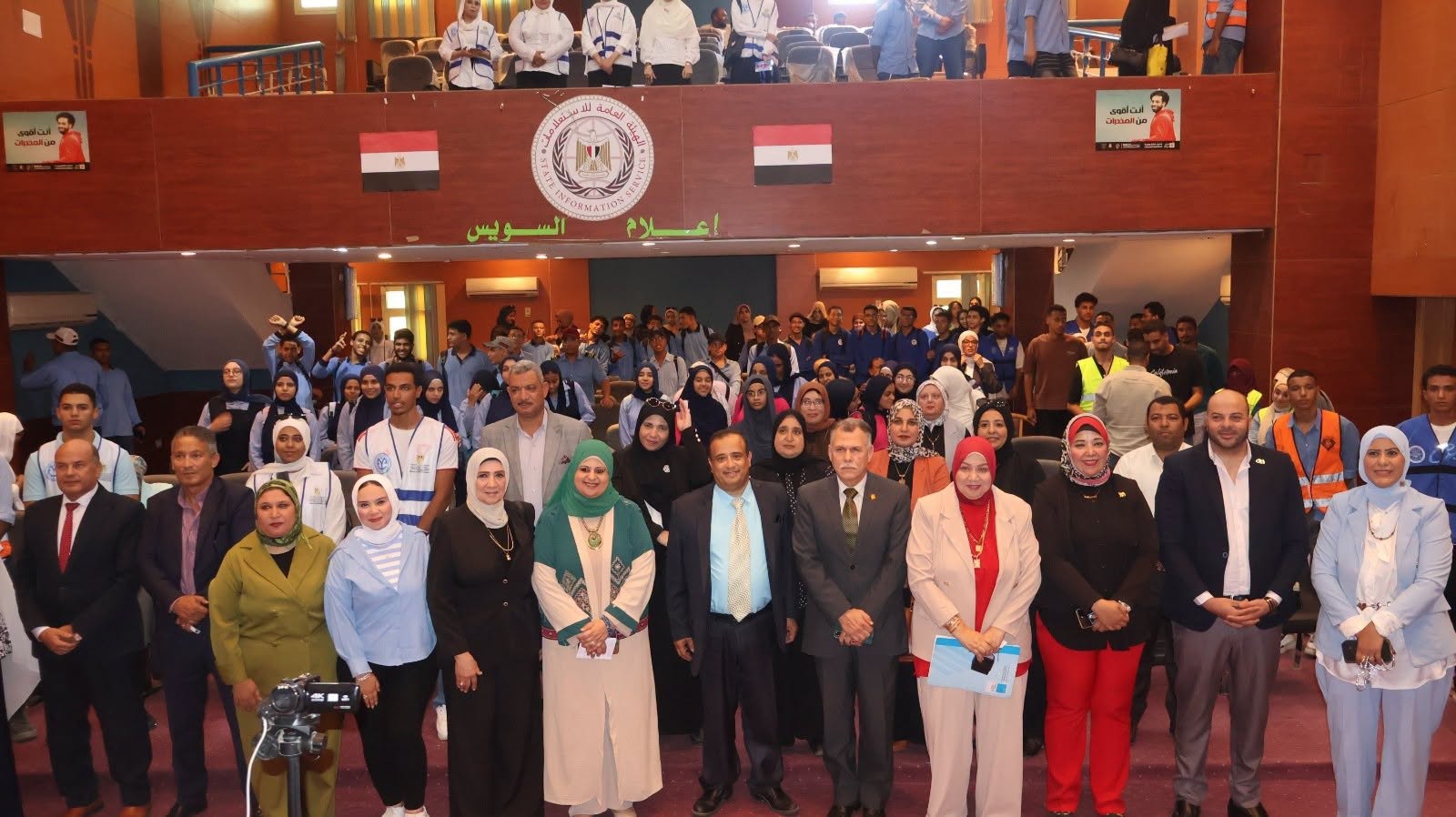
Under the patronage of Prof. Dr. Ashraf Heneigal, President of Suez University, and as part of efforts to strengthen the community partnership between Suez University and the State Information Service (SIS), represented by the Suez Media Complex, Prof. Dr. Ashraf Galal, Dean of the Faculty of Mass Communication and Communication Technology, participated in an awareness-raising workshop entitled “The Role of Modern Media in Protecting Egyptian National Security and the State’s Higher Interests.” The workshop was attended by a large number of young people and students, as well as representatives of institutions and organizations concerned with community awareness and human development.
During the workshop, Prof. Dr. Galal discussed the concept of awareness and its various dimensions, explaining that building awareness constitutes one of the fundamental pillars for maintaining the stability of the state and protecting its resources, particularly amid digital transformations that have made modern media and social media platforms among the most influential tools in shaping public opinion.
The lecture addressed the growing role of social media in influencing young people's minds and the methods that may be used to spread misleading and destructive ideas. It emphasized the importance of developing an informed public awareness capable of distinguishing between facts and rumors and confronting attempts at media manipulation and misinformation.
The workshop also highlighted some of the most prominent methods employed through digital platforms, including the dissemination of rumors, misleading propaganda, and incitement, and examined the threats these phenomena pose to intellectual and social security. A number of statistics and reports concerning the monitoring of rumors and mechanisms for addressing them were presented, with emphasis on the importance of concerted efforts among national institutions to build public awareness as the first line of defense against malicious campaigns targeting the stability of the Egyptian state.
The workshop further addressed the risks associated with deepfake technology and the harmful uses of artificial intelligence, particularly the increasing difficulty of distinguishing authentic content from fabricated material. It also highlighted the dangers of taking information out of context or selectively presenting parts of it with the aim of misleading the public and influencing public opinion.
In a related context, a number of illustrative examples and films were presented addressing methods for verifying news and information and introducing reliable sources and websites that can be consulted to verify the credibility of circulating content. The workshop also stressed the importance of sound media literacy and highlighted the roles of the family, school, university, places of worship, and sports and cultural clubs in fostering awareness and developing individuals capable of critical thinking and confronting rumors.
The workshop concluded with a review of a set of scientific and media-based criteria and mechanisms that can be used to refute rumors and respond to them. Examples supported by the latest relevant statistics and indicators were also presented, contributing to the promotion of national awareness and strengthening society’s capacity to confront misinformation and campaigns aimed at spreading doubt and confusion.