 Login


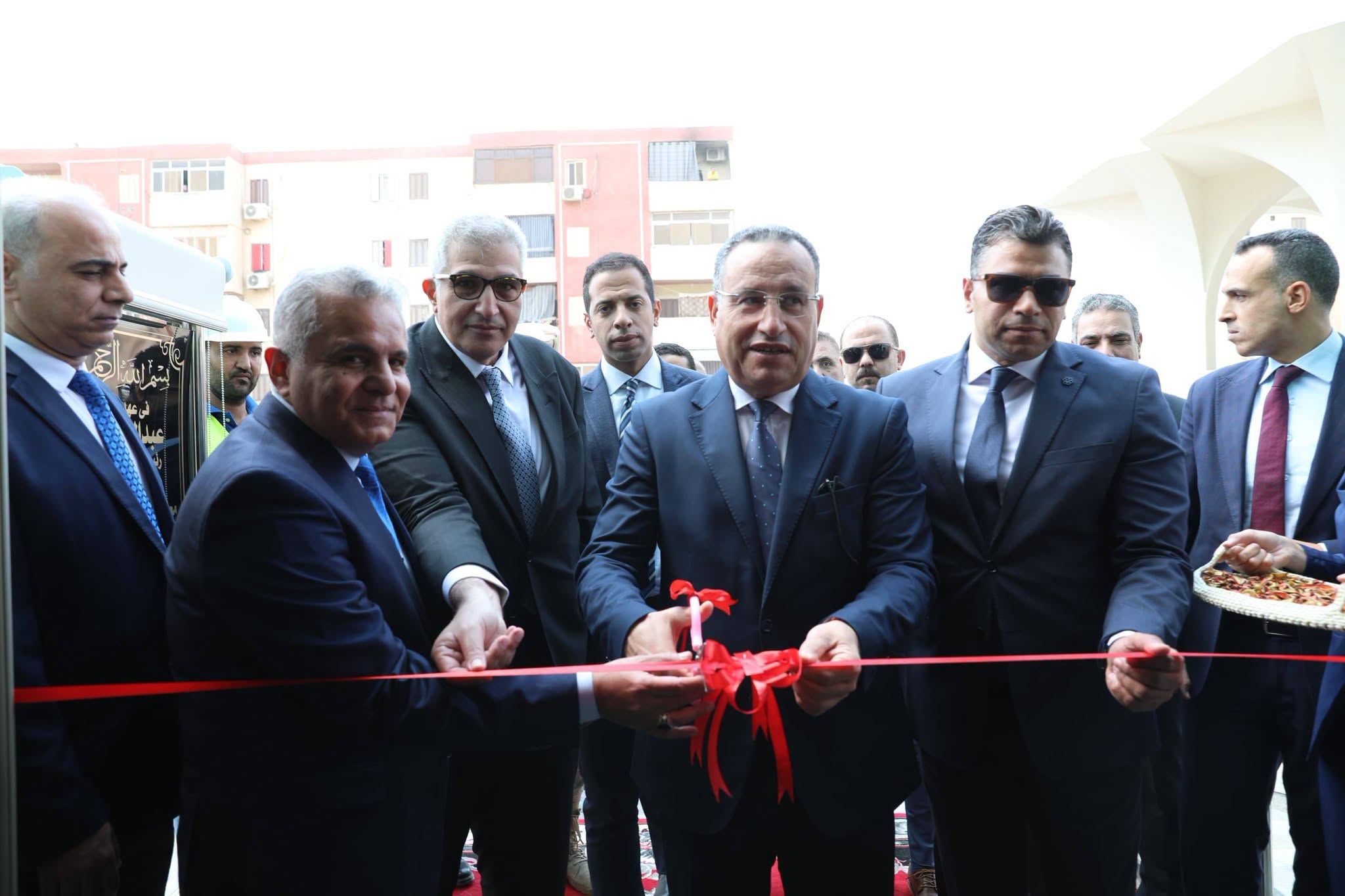
• Opening of the university dormitories at the University City in Al-Mustaqbal
• Inspection of the university hospital and assessment of the standard of services provided to citizens
• The university hospital is equipped with 110 beds and 19 outpatient clinics
Dr. Abdulaziz Qanswa, Minister of Higher Education and Scientific Research and Acting Minister of Culture, accompanied by Major General Hani Rashad, Governor of Suez, Dr Ashraf Hnijal, President of Suez University, Dr. Mustafa Refaat, Secretary-General of the Supreme Council of Universities, and Dr. Mohamed Allam, Deputy Governor of Suez, inaugurated a number of educational and medical projects at Suez University this Sunday morning, at a cost of 1.722 billion Egyptian pounds, in the presence of a number of senior officials from the Ministry and the University.
The Minister began his tour by inaugurating the university dormitories at the University City in Al-Mustaqbal, the building comprises a ground floor and four identical upper floors, in addition to a ground-level water tank and a pump room, with a total area of approximately 2,200 square meters. It also contains 146 rooms, with a capacity of 400 students, at a cost of 474 million pounds.
The Minister also inspected the university hospital. The first phase of the hospital, which has been equipped with the latest medical facilities, 110 beds, comprising 50 inpatient beds, 7 intensive care beds, 13 intermediate care beds, 18 incubators for premature and newborn babies, as well as 22 beds for the hemodialysis unit.
In addition, the hospital also houses five specialized operating rooms, including one for orthopedic and neurosurgery, one for gastrointestinal endoscopy, one for gynecological and obstetric surgery and endoscopy, one for ophthalmic surgery, and a room for general, cosmetic, urological and vascular surgery. The hospital also houses a medical laboratory, rooms for conventional radiography, fluoroscopy and CT scans, and 19 outpatient clinics, alongside several specialist medical units, including a burns and wounds unit, at a cost of 1.248 billion pounds.
During his tour of the hospital, the Minister met with some of the patients attending the hospital to receive medical treatment and assured himself of the standard of healthcare provided to them.
Dr. Abdulaziz Qanswa praised Suez University and its ongoing efforts to develop its academic, research and service infrastructure, which reflect its commitment to raising the quality of university education and improving the educational and research environment. He also explained that the university’s distinguished academic staff and research capabilities form a fundamental pillar for achieving academic excellence, supporting innovation, and strengthening the university’s role in serving the community and meeting development needs.
Therefore, the Minister noted that Suez University is continuing to implement its ambitious plan to develop its educational, research and medical facilities and modernize its infrastructure, in line with the state’s strategy to modernize Egyptian universities and expand their capacities, thereby enhancing the university’s readiness to meet the challenges of the future. Hence, he emphasized that these development projects contribute to raising the efficiency of the educational and research system, enhancing the university’s competitiveness, and preparing qualified personnel capable of contributing to the achievement of sustainable development goals and supporting the knowledge-based economy.
For his part, Major General Hani Rashad, Governor of Suez, emphasized that Suez University is an important center of learning and research in the governorate, and that it plays a pivotal role in preparing qualified human resources, supporting the scientific research and innovation ecosystem, and providing scientific and practical solutions that help address the challenges facing the local community and meet its needs. He highlighted the importance of the university’s community role in serving the people of the governorate and contributing to development efforts, through cooperation with state institutions and the productive and industrial sectors, and by utilizing the university’s scientific and research expertise and capabilities to support development projects and achieve sustainable development. He emphasized that the continued development of the university and its academic and research programs enhance its ability to fulfil its educational, scientific, and community mission.
Moreover, Dr. Ashraf Hnijal emphasized that Suez University is pressing ahead with the implementation of an integrated strategy to develop its educational, research and medical facilities, and to expand modern academic programs that meet the needs of the labor market and the requirements of development. He also noted that these projects form part of the university’s plan to provide a state-of-the-art educational and research environment that supports the quality of the educational process, innovation and scientific research, and contributes to preparing graduates with the knowledge and skills necessary to compete in the labor market at local, regional, and international levels.