 Login


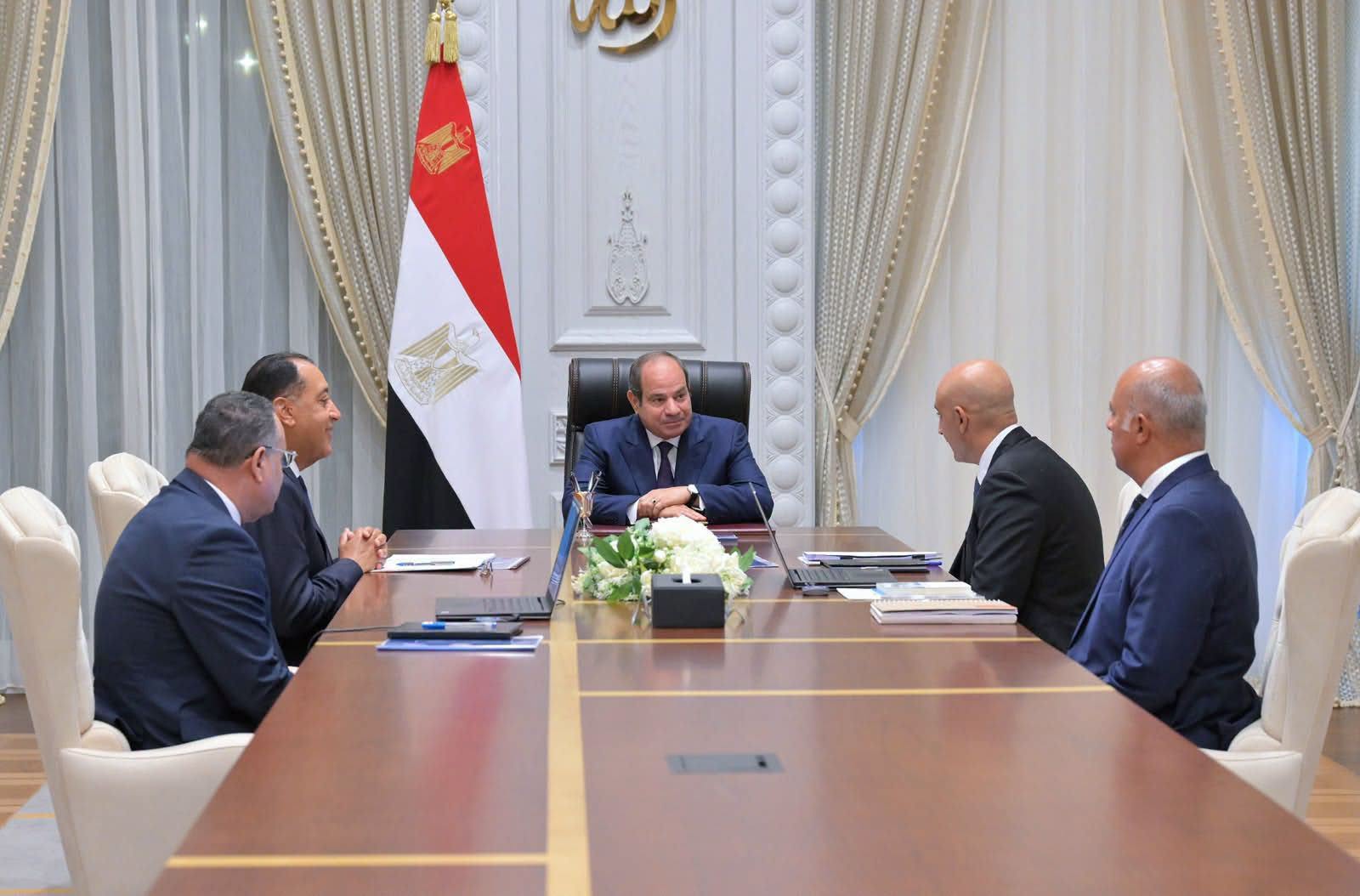
During the meeting, the official spokesperson for the Presidency stated that the President reviewed the ongoing preparations for the start of the new academic year in Egyptian schools, institutes, and universities, as well as the smooth operation of the educational process in accordance with the highest standards of quality and efficiency, as well as the ongoing efforts to develop curricula and to train and qualify teachers and staff at educational institutions, thereby ensuring the production of graduates with an outstanding level of academic and practical competence who have acquired the skills necessary to enter the job market.
Then, Ambassador Mohamed El-Shennawi, the official spokesperson, noted that the Minister of Education and Technical Education gave a presentation on developments in the implementation of the Egyptian Baccalaureate system and the General Secondary Education system, emphasizing that the new curricula were developed in accordance with the highest international standards, explaining that specialized institutions were consulted in the process of reviewing and preparing the curricula to ensure that students benefit from the latest educational technologies, thereby contributing to the preparation of qualified professionals. He also emphasized the commitment to fully upholding the principle of equal opportunity among Egyptian students, noting that the needs of various student groups are considered, including providing an appropriate educational environment for all students in accordance with their needs.
After that, the spokesperson added that the Minister of Education and Technical Education also discussed developments in cooperation between Egypt and Japan in education, noting that Egyptian Japanese schools have become a leading model that supports Egypt’s efforts to develop its education system and modernize its curricula. The Minister also highlighted ongoing efforts to strengthen cooperation with the Federal Republic of Germany in the field of technical education and vocational training, as well as cooperation with the Italian Republic in the field of applied technology schools and technical education, emphasizing the commitment to using this cooperation to prepare qualified professionals to meet the needs of the local and international labor markets. The Minister of Education and Technical Education also noted that, in an effort to develop students’ skills in the fields of technology and programming and to strengthen international partnerships that provide students with outstanding educational and training opportunities as well as in line with the Ministry’s efforts to encourage students to learn programming the Ministry has coordinated with the Japanese company “Sprex” to provide travel scholarships to Japan for ten students from various governorates in Egypt, in recognition of their excellence and achievements in the field of programming, as well as to provide fifty internship opportunities for students at companies, thereby helping them gain practical experience and align their academic skills with the needs of the job market.
In this context, the President directed that efforts continue to develop all aspects of the education system, including the periodic updating of curricula and textbooks, in a manner that keeps pace with relevant scientific and educational developments and ensures that students are educated according to the latest and most effective standards. The President also emphasized the importance of continuing to develop cooperation with various international partners to support the Egyptian government’s efforts to improve the education system and to draw on best educational practices in preparing and training teaching staff, in a manner suited to the requirements of the Egyptian context.
In addition, the spokesperson stated that the Minister of Higher Education and Scientific Research outlined developments aimed at improving the educational environment at Egyptian universities and institutes and modernizing the quality of educational and training services, thereby helping prepare graduates to keep pace with scientific and technological advancements. The Minister also addressed efforts to enhance the capabilities of various Egyptian universities, as well as measures to provide an integrated educational and research environment and the best training and qualification opportunities for students. He reviewed ongoing efforts to transform Egypt into a regional and international hub for higher education, scientific research, and innovation, in addition to ongoing efforts to strengthen cooperation with several international partners in the field of educational and cultural exchange, to take advantage of the opportunities that this cooperation offers to students, researchers, and teaching staff members to exchange experiences, skills, and scientific, academic, and research methods. The Minister of Higher Education and Scientific Research also addressed efforts aimed at improving the international rankings of Egyptian universities and boosting their competitiveness regionally and internationally, noting the measures taken to build teaching staff capacity and improve the quality of academic and administrative performance through partnerships with leading international universities and institutions, to benefit from their expertise in enhancing the efficiency of the higher education and scientific research system.
Moreover, the official spokesperson explained that the Minister of Higher Education and Scientific Research reviewed the developments at “Future Skills,” noting that it is one of the national initiatives aimed at preparing a generation capable of keeping pace with the jobs of the future and the demands of the digital economy by providing advanced digital training tracks and international professional certifications to students, graduates, teaching staff members, and employees at institutions of higher education, thereby strengthening the alignment of the education system with the needs of the labor market. He added in this regard that the Ministry of Higher Education and Scientific Research is preparing to sign a cooperation agreement with the United Nations Development Program (UNDP) to provide global training content from leading international universities, institutions, and companies in fields with growing demand, including artificial intelligence, data analysis, cybersecurity, cloud computing, entrepreneurship, and green skills. The first phase aims to provide approximately 50,000 training licenses that will benefit nearly 150,000 students and trainees, with a gradual expansion to reach a total of approximately 1.5 million licenses over three years. The minister added that the Academy’s role is not limited to providing training courses; it also aims to build an integrated and sustainable national system for skills development and lifelong learning, based on identifying skills gaps, aligning training programs with the actual needs of the labor market, and measuring the impact of training and linking it to professional readiness and employment opportunities, as well as expanding access to training opportunities for youth in various governorates. This will help enhance the competitiveness of Egyptian graduates at the local, regional, and international levels, narrow the gap between educational outcomes and labor market demands, and foster a culture of lifelong learning. This supports the state’s vision of a competitive economy based on knowledge and innovation and enhances the ability of Egyptian youth to capitalize on the opportunities presented by the jobs of the future and the rapid transformations in the digital economy.
Hence, the official spokesperson added that the Minister of Higher Education and Scientific Research noted that, in accordance with the President’s directives to align academic majors with the current and future needs of the labor market at the national, regional, and international levels. Students have been distributed among various majors for the upcoming academic year, with an increase in student enrollment at technological universities, as well as in faculties of computer science, information technology, artificial intelligence, and data science; faculties of science and engineering; the medical and nursing sectors; and faculties of industrial education, in addition to faculties of agriculture, tourism, and hospitality. Conversely, there has been a move to reduce the number of students admitted to literary sector faculties in fields of less demand in the local and international labor markets.
Later, the official spokesperson noted that, in this regard, the President directed that efforts continue to develop the higher education and scientific research system and build upon the achievements made, given the central role this system plays in developing Egyptian citizens and achieving development. The President also directed that high priority be given to preparing generations equipped with the latest scientific tools to meet the needs of the labor market, noting the importance of continuing to implement digitization measures and relying on artificial intelligence applications in the modernization process, thereby ensuring maximum returns on efforts to develop education. In the same context, the President emphasized the need to strengthen international cooperation and the exchange of expertise with partner countries and prestigious educational institutions, thereby contributing to the adoption of international best practices and supporting the Egyptian state’s efforts to develop education. He noted the importance of partnerships to establish foreign branches of international educational institutions in Egypt, thereby ensuring the development of relevant national capacities.