 Login


(((Quoted from the official website of the Ministry of Higher Education and Scientific Research)))
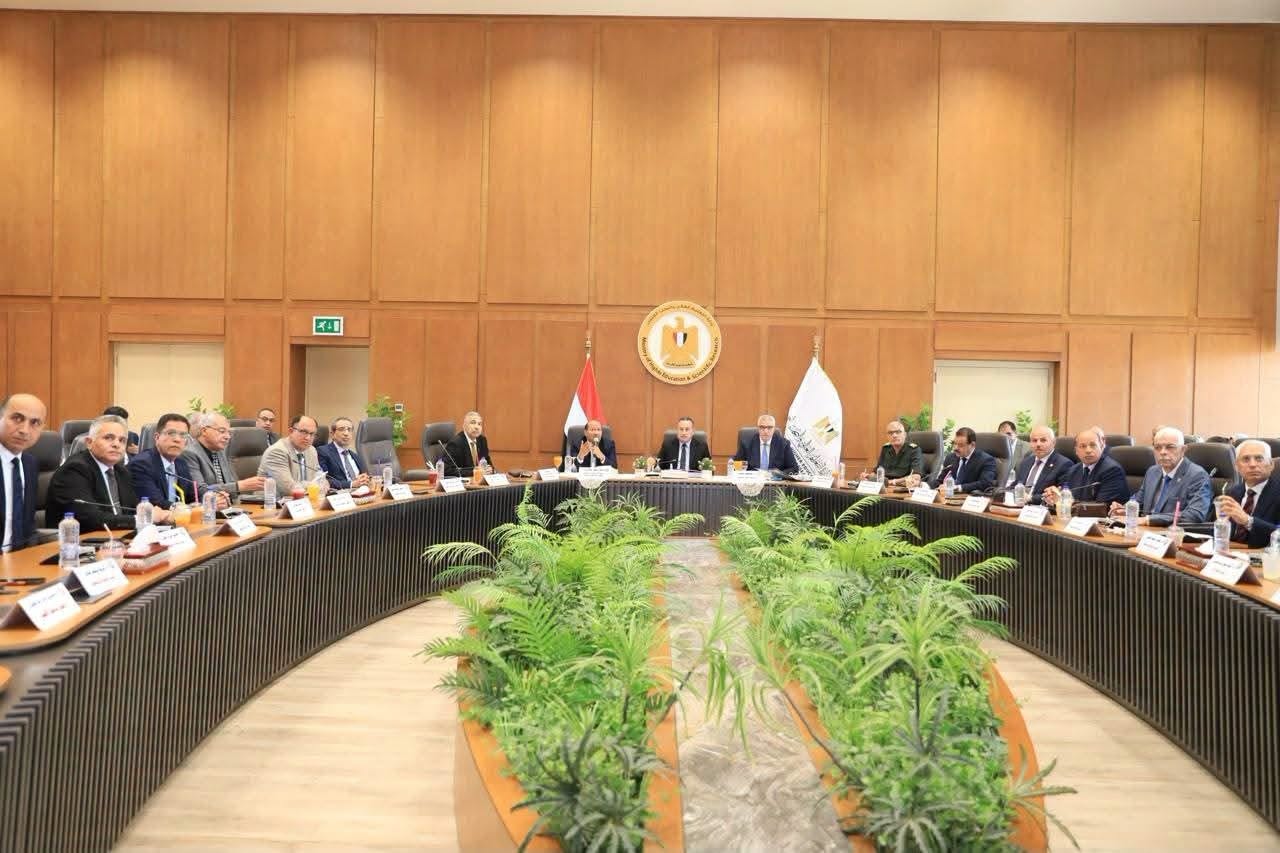
Minister of Higher Education Chairs Meeting of the Supreme Council of Universities at the Ministry’s Headquarters in the New Capital.
The Supreme Council of Universities extends its congratulations to President Abdel Fattah El-Sisi and the Egyptian people on the 13th anniversary of the June 30 Revolution.
The Council approves the formation of the Higher Coordination Committee for the 2026/2027 academic year.
Minister of Higher Education Directs:
- To strengthen the role of universities in the National Initiative for Smart Green Projects.
- Intensifying the launch of comprehensive university development caravans nationwide.
The Minister of Higher Education emphasizes:
- Continued efforts by universities to rationalize energy consumption.
- Continued implementation by universities of sports, arts, cultural, and social activities during the summer vacation.
-
29 Egyptian universities were included in the US News World University Rankings for the 2026/2027 academic year.
-
18 universities were included in the 2027 general edition of the QS World University Rankings.
-
60 Egyptian scientific journals were included in the 2025 Clarivate report on international journals.
-
45 Egyptian universities were included in the 2026 Times Higher Education Impact Rankings.
The Supreme Council of Universities held its regular meeting, chaired by Dr. Abdelaziz Qanswa, Minister of Higher Education and Scientific Research, in the presence of Dr. Mustafa Refaat, Secretary of the Council, and the Council members, at the Ministry’s headquarters in the New Capital.
At the beginning of the meeting, the Council extended its congratulations to President Abdel Fattah El-Sisi and the Egyptian people on the 3rd anniversary of the June 30 Revolution. May Allah protect Egypt and bless it with goodness and prosperity.
The Minister also emphasized the need to complete the maintenance work required for university laboratories and facilities before the start of the new academic year, 2026/2027, to ensure the quality of the educational process.
Dr. Abdulaziz emphasized the need for universities to continue organizing sports, arts, cultural, and social activities, as well as training programs, and to support talented athletes and artists during the summer vacation to harness the potential of youth.
The minister directed that emphasis be placed on transforming scientific research outputs into products that contribute to the national economy, as well as spreading a culture of innovation and entrepreneurship and linking scientific research to development plans and community needs.
The minister praised the achievements made in terms of international university rankings, including the inclusion of 29 Egyptian universities in the US News World University Rankings for the year (2026/2027), twenty-three Egyptian universities were ranked among the world’s top 1,000 in this year’s rankings, in addition to the inclusion of 18 Egyptian universities and higher education institutions in the QS World University Rankings for 2027. Furthermore, the 2025 Journal Citation Reports (JCR) issued by Clarivate included 60 Egyptian scientific journals in its database. Furthermore, 45 Egyptian universities were included in the Times Higher Education Impact Rankings 2026, which measures universities’ performance based on their contribution to achieving the United Nations Sustainable Development Goals.
The minister emphasized the need for universities to continue supporting researchers to increase scientific publications in prestigious academic journals and to improve the rankings of Egyptian universities in major global rankings.
The Council heard a report on the most notable activities of the Ministry of Higher Education and Scientific Research during June, most notably the meeting between President Abdel Fattah El-Sisi, Dr. Mostafa Madbouly, Prime Minister, and Dr. Abdelaziz Qanswa, Minister of Higher Education and Scientific Research, to follow up on the Ministry’s vision and action plan for the coming phase, which aims to transform Egypt into a regional and international hub for higher education, scientific research, and innovation, thereby contributing to the development of a knowledge-based economy and attracting students and researchers from around the world, and to review efforts to build teaching staff capacity and improve the quality of academic and administrative performance, as well as to review the progress made in linking scientific research to industry and the knowledge economy, besides the status of the Ministry’s health projects, and efforts to export Egyptian education by establishing a system for selecting leading universities, expanding joint programs with highly ranked international universities and hosting certain programs through academic partnerships, in addition to strengthening higher education partnerships and establishing overseas branches by developing a modern model for cross-border partnerships and strengthening institutional partnerships.
The Prime Minister held a meeting with the Minister of Higher Education to review the progress of the Ain Shams University Medical City project and follow up on the implementation of several presidential directives, including the Tier 1 model for leading Egyptian universities, the expansion of Egyptian university branches abroad, the Future Skills Academy, and the 500500 International Cancer Center project, all of which support the development of the higher education system and its alignment with the needs of the labor market.
As part of Dr. Abdel Aziz Qanswa’s visit to France to strengthen scientific partnerships and support innovation with leading French academic and research institutions, the minister visited the Valley of Science and Technology at the University of Paris-Saclay, one of the world’s leading models for linking universities with industry and transforming knowledge into economic and developmental value, He also participated in the Viva Technology 2026 exhibition, one of the world’s largest events specializing in technology, innovation, and entrepreneurship. Additionally, the Egyptian Embassy in Paris hosted an extensive meeting that brought together the minister with several presidents and representatives of French universities and academic and research institutions, as well as representatives from the French Ministry of Europe and Foreign Affairs, to discuss strengthening academic and scientific cooperation with France. Dr. Abdelaziz Qanswa also held a meeting with Dr. Khaled El-Anany, Director-General of UNESCO, to discuss enhancing cooperation in the fields of higher education, scientific research, and innovation, and to explore the establishment of a Category 1 UNESCO center in Egypt.
The report noted that the ministers of higher education and labor signed a cooperation protocol to implement accredited diploma and professional master's programs in the fields of occupational safety and health and human resources. The minister also attended the signing ceremony for a cooperation protocol between the British University in Egypt and the Federation International Sports University (FISU) to launch the first master’s program in sports management in the Middle East. The minister also witnessed the signing of a cooperation protocol between the Egyptian Military Academy and the Academy of Scientific Research and Technology to collaborate in various scientific and research fields, to foster national innovation and support small and medium enterprises.
He met with university deans of community service and environmental development, as well as directors of university hospitals, to discuss mechanisms for increasing the number of integrated medical convoys dispatched to various parts of the country, as well as for increasing the number of convoys sent to African countries. The minister also met with the president of the Egyptian Authority for Quality Assurance and Accreditation (ETQAN) to discuss mechanisms for developing the quality and accreditation system in technical and technological education. He also opened the 32nd meeting of the Board of Trustees of the Egyptian Japanese University of Science and Technology via videoconference. Moreover, the minister discussed with the Minister of Planning and Economic Development ways to strengthen cooperation for the development of the innovation and entrepreneurship ecosystem. Additionally, the minister met with the governor of the Red Sea Governorate to discuss mechanisms for cooperation on several development and service projects in the Red Sea Governorate.
As part of his field visits, the minister visited the Egyptian Japanese Al-Kozn Institute in 10th of Ramadan City, in cooperation with the Japan International Cooperation Agency (JICA), to monitor the progress of the educational process and training activities at the institute. The minister also conducted an inspection tour to monitor progress at the new campus of the French National University in Egypt in Shorouk City, to review the completion rates of the project’s various components, and to follow up on construction work on the academic and service buildings.
The report highlighted the inauguration by the Governor of the Central Bank of Egypt and the Minister of Higher Education of several projects and medical units at the National Cancer Institute following their development with support from the Central Bank and the banking sector, The minister also attended the launch of the first edition of the “Mediterranean Forum on Technical and Vocational Education” and participated in a seminar to announce the results of an analysis of labor market demand in Egypt during the first quarter of 2026, in addition to holding an extensive meeting with teaching staff members and associated staff at Cairo University’s Faculty of Medicine, and the inauguration of several facilities at Cairo University’s Faculty of Medicine, as well as the opening of the sixth edition of the “Khatwa” 2026 Job Fair.
The report added that the minister participated in the first specialized event aimed at supporting the Egyptian private sector’s participation in the “Horizon Europe” program. Furthermore, the minister participated in the Start Summit 2026 at the Grand Egyptian Museum, where the top student volunteers in university social solidarity units and the top three units were honored. He also participated in the expanded meeting held by the House of Representatives’ Committee on Education and Scientific Research.
As part of efforts to strengthen international relations, Dr. Abdel Aziz Qanswa received a high-level delegation from the Republic of Romania that included an advisor to the President of Romania, the Romanian candidate for the position of Secretary-General of the International Organization of La Francophonie, and the Romanian Ambassador to Egypt. The minister also received the envoy of the President of the Democratic Republic of Congo and the candidate for the position of Secretary-General of the International Organization of La Francophonie, and the Ambassador of the Democratic Republic of the Congo to Egypt, as well as a delegation from Oxford Brookes University in the United Kingdom to discuss establishing a branch of the university in Egypt. In addition, the minister held a meeting to follow up on the latest developments regarding the establishment of the Mediterranean University in Alexandria, as well as a meeting with leaders of Microsoft Egypt and the Middle East to strengthen cooperation in digital transformation and artificial intelligence.
The Council heard a presentation by Ambassador Hisham Badr, General Coordinator of the National Initiative for Smart Green Projects, regarding the initiative, which was launched under the auspices of President Abdel Fattah El-Sisi, by a decision of the Prime Minister, and under the supervision of Dr. Ahmed Rostom, Minister of Planning and Economic Development. The presentation highlighted the importance of building an integrated system for growth and green technologies by accelerating the transition to a green economy and fostering a culture of innovation and environmental responsibility. It also reviewed the initiative’s contribution to achieving the Sustainable Development Goals by identifying smart green projects at the governorate level, establishing a database of smart green projects, connecting green projects with donors, financial institutions, and international organizations to secure funding, forging partnerships between local and international entities, and reviewing the services provided by the Projects Development Authority. In this context, the Council agreed to urge universities and research centers to participate in the initiative and submit smart green projects before the submission deadline, which is the end of August.
Hence, the Council heard a presentation by Dr. Ghada Farouk, Vice President for Education and Student Affairs at Ain Shams University and Secretary of the Higher Committee for Comprehensive University Development Convoys, on the committee’s vision and strategic pillars, highlighting the strategic pillars for achieving this vision by ensuring geographic equity in the distribution of the caravans, guaranteeing their reach to remote areas, and building bridges of development to the Nile Basin countries and Africa. The presentation also focused on the concept of transitioning from temporary initiatives to a sustainable system of work that yields tangible development outcomes, in addition to reviewing the services provided by the Comprehensive Development Convoys, including medical, nursing, veterinary, agricultural, cultural, literacy, awareness-raising, economic empowerment, and community services), the key target areas for launching the convoys, previous efforts to dispatch medical convoys to Africa, and the importance of integration and cooperation among the various stakeholders.
The Council heard a presentation by Dr. Omar Salem, Director of the Center for E-Services and Knowledge at the Supreme Council of Universities, which included a model of a guide for using a comprehensive approach to evaluate university performance based on the universities’ strategic plans to reflect their performance, as a continuous diagnostic and developmental tool that compares actual performance with the state’s national strategic targets. The framework aims to direct resources toward achieving sustainable excellence and improving the university’s national and international rankings.
Dr. Adel Abdel Ghaffar, media advisor and official spokesperson for the ministry, stated that the Council approved the formation of the Higher Coordination Committee for the 2026/2027 academic year.
The official spokesperson added that the Council reviewed the implementation procedures carried out during the month of June to facilitate the allocation of 16,000 feddans of land in the New Valley Governorate to the Ministry of Higher Education and Scientific Research for use in research activities at Egyptian universities.
Dr. Nasser Al-Jizawi, President of Benha University, presented a report on the current and future status of the university’s solar power plants, in light of the university’s strategy to rationalize electricity consumption, gradually transition to the use of solar power units, and connect them to the public electricity grid.
Dr. Sherif Khater, President of Mansoura University, presented a report on the university’s strategy to rationalize the consumption of energy and petroleum products, maximize the use of natural light, rationalize gas usage, and improve water use, thereby achieving environmental sustainability.
The Council reviewed a report presented by Dr. Sherif Saleh, President of Port Said University, on the university’s achievements during the 2024–2025 academic year. The report covered key initiatives, digital transformation, international rankings, international relations, international students, student activities, and development projects across various academic, research, community, and administrative sectors.
The Council also reviewed the universities’ progress in developing a comprehensive plan to enhance the performance of faculty development centers, to ensure these centers effectively fulfill their mandated objectives in line with contemporary requirements and meet the needs of teaching staff members participating in training programs.
The Council was briefed on the technical procedures undertaken by the Center for E-Services and Knowledge at the Supreme Council of Universities to issue the Fundamentals of Digital Transformation certificate (FDTC) digitally and in a secure manner that facilitates verification of its authenticity.