 Login


As part of its commitment to preparing and qualifying academic staff for leadership positions within its faculties, Suez University organized a specialized training program through the Faculty and Leadership Development Center. The program was designed for faculty members seeking nomination for leadership positions, including Dean, Vice Dean, and Head of Department, as well as administrative staff interested in applying for the position of Faculty Secretary.
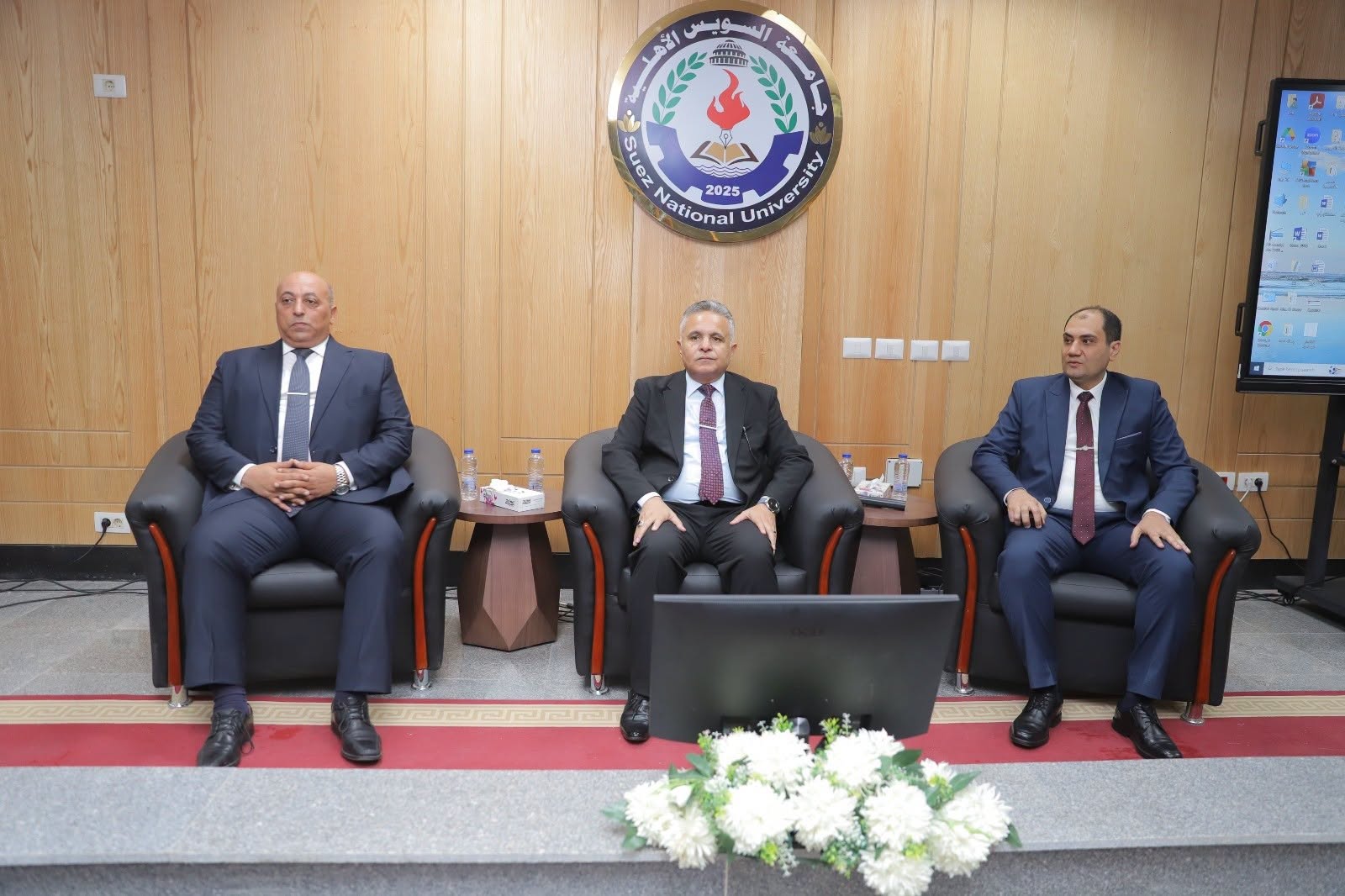
The training program was held under the patronage and in the presence of Prof. Dr. Ashraf Heniegal, President of Suez University. The event commenced with an important lecture on the role of the Administrative Control Authority and anti-corruption efforts, delivered by:
Major General Alaa El-Masry, Vice President of the National Anti-Corruption Academy.
Major General Mohamed Talaat, Head of the Administrative Control Authority Office in Suez.
The opening session was attended by Prof. Dr. Ezzeldin Hosseini Gad, Vice President for Education and Student Affairs; Prof. Dr. Sherif Fahmy, Acting Vice President for Graduate Studies and Research; Prof. Dr. Osama Massoud, Vice President of Suez National University for Academic Affairs; Prof. Dr. Osama Kaddour, Acting Vice President for Community Service and Environmental Development; and Prof. Dr. Ehab Shehata, Director of the Faculty and Leadership Development Center.
Prof. Dr. Ehab Shehata emphasized that the primary objective of the program is to strengthen leadership and administrative skills among faculty members in line with the demands of the current academic environment.
Prof. Dr. Ashraf Heniegal, President of Suez University, affirmed that organizing this training program is part of the university’s broader strategy to prepare academic leaders capable of assuming responsibility and contributing effectively to institutional development. He noted that the university places great importance on qualifying faculty members aspiring to leadership positions, ensuring the continuity of institutional excellence and advancement.
He further explained that incorporating anti-corruption topics into the training curriculum reflects the university’s commitment to promoting integrity, transparency, and ethical governance, while reinforcing the role of university leaders in building an educational environment founded on justice, accountability, and equal opportunity.
The lecture highlighted the importance of embedding the values of integrity and transparency within educational institutions and emphasized the responsibility of university leaders in fostering a culture of anti-corruption. Such efforts contribute to creating a healthy academic environment based on fairness and accountability while preparing effective academic leaders for the future.
The training program also focused on:
Equipping faculty members with the skills necessary to manage faculties and academic departments efficiently.
Promoting integrity and raising awareness of the risks of corruption and the mechanisms for combating it within educational institutions.
Developing administrative competencies through training in strategic planning and decision-making processes.
Building a strong institutional culture rooted in teamwork, social responsibility, and community engagement.
The initiative reflects Suez University’s ongoing commitment to developing qualified academic and administrative leaders who can contribute to achieving excellence in higher education while upholding the highest standards of integrity and institutional governance.