 Login


Prof. Dr. Ashraf Hanigel, President of Suez University, played a decisive role in Egypt’s success and the unanimous renewal of confidence in chairing the Board of Directors of the African Union Centers of Excellence. His active presence in previous meetings in Addis Ababa embodied Egypt’s firm commitment to continental cooperation and established a professional approach to leading this strategic file. His keenness to directly participate in shaping governance and sustainability strategies, and in supporting African governments in facing climate change challenges, had a profound impact on consolidating Egypt’s academic and research standing. This paved the way for this new victory, which reflects the continent’s trust in Egypt’s leadership and confirms the continuity of Suez University’s leading role at the international level.
(((The official website of the African Union reported on this matter as follows)))
https://www.au-ibar.org/.../aun-cefaab-advances-practical...
AUN-CEFAAB Advances Practical Solutions for Africa’s Fisheries and Blue Economy
Mombasa, Kenya | 27–28 May 2026
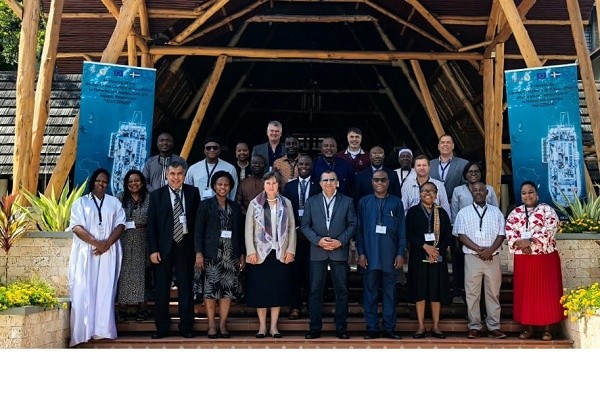
The African Union Network of Centres of Excellence in Fisheries, Aquaculture and Aquatic Biodiversity (AUN-CEFAAB) convened its Fourth Physical Meeting in Mombasa, Kenya, from 27 to 28 May 2026 under the FishGov2 Project and the *Conserving Aquatic Biodiversity in the African Blue Economy Project*, both implemented by the African Union Inter-African Bureau for Animal Resources (AU-IBAR) with support from the European Union and the Swedish International Development Cooperation Agency (Sida), respectively.
The meeting brought together African Union-endorsed Centres of Excellence, AU-IBAR, AUDA-NEPAD, and development partners to review progress, strengthen coordination mechanisms, and agree on strategic actions aimed at enhancing the operational effectiveness and long-term sustainability of the network.
The network was established to unite African universities, research institutions, and technical centres working in the fields of fisheries, aquaculture, and aquatic biodiversity. Its primary objective is to ensure that Africa’s scientific and technical expertise is effectively connected and utilized to support policymaking, capacity development, and practical solutions for African Union Member States.
Speaking at the opening session on behalf of the Director of AU-IBAR, Dr. Huyam Salih, Ms. Hellen Guebama emphasized that Africa possesses substantial expertise in the sector, but that this expertise must be more effectively organized and applied.
> “The question is no longer whether the expertise exists in Africa; it clearly does. The challenge is how to better connect it, strengthen collaboration, and translate knowledge into practical impact. That is why this network matters.”
The meeting built upon previous engagements held in Cairo, Addis Ababa, and Kampala. It also marked a significant milestone in the network’s development as it transitions from project-supported coordination toward stronger institutional leadership and self-governance.
Representatives of AUDA-NEPAD highlighted the importance of moving beyond policy frameworks and strategic plans toward practical implementation. They stressed that the Centres of Excellence should serve as active partners in supporting Member States and regional institutions in implementing the African Union’s priorities in fisheries, aquaculture, and aquatic biodiversity.
> “Africa does not need policies and strategies alone. What Africa needs now are capable institutions that can translate continental and regional frameworks into practical solutions for Member States.”
AUDA-NEPAD presented five key messages to guide the future direction of the network. First, the network must be organized for effective delivery through clear governance structures, well-defined roles, and a realistic work plan. Second, coordination should be strengthened while respecting the autonomy of individual Centres. Third, the network must remain responsive to the needs of Member States and regional institutions. Fourth, recognition should be based not only on endorsement but also on measurable performance. Finally, sustainability must be prioritized through the exploration of funding opportunities beyond project-based support.
The Chairperson of the Network of Centres of Excellence, Professor Osama Kaddour of the Faculty of Fisheries Resources, Suez University, Egypt, also emphasized the importance of collaboration among member centres, particularly in the areas of technical knowledge exchange, applied research, technology transfer, and human capacity development across the African continent.
During the two-day meeting, participants reviewed progress achieved since previous meetings, shared institutional experiences, and discussed the draft operational framework of the network. Deliberations also addressed issues related to capacity building, equipment support, curriculum development, research collaboration, and the role of the Centres in advancing continental and regional priorities.
A key anticipated outcome of the meeting was the adoption of an operational framework to guide the network’s future activities. The meeting also supported the election of a Bureau comprising a Chairperson, Vice-Chairperson, General Secretary, Treasurer, and Vice-Secretary for the Work Programme. These measures are expected to strengthen ownership, accountability, and institutional continuity within the network.
The Mombasa meeting took place at a time when Africa’s aquatic resources are facing increasing pressures arising from climate change, overfishing, habitat degradation, illegal, unreported and unregulated (IUU) fishing, and growing demand for fish and aquatic food products. Consequently, stronger institutions, improved data systems, applied research, and coordinated technical support are essential to addressing these challenges.
The Fourth Physical Meeting of AUN-CEFAAB represents an important step toward positioning the Centres of Excellence as an effective mechanism for advancing Africa’s blue economy agenda. Its success will ultimately be measured not only by the governance structures established but also by the quality and impact of the support provided to Member States, regional institutions, and communities that depend on fisheries, aquaculture, and aquatic biodiversity.