 Login


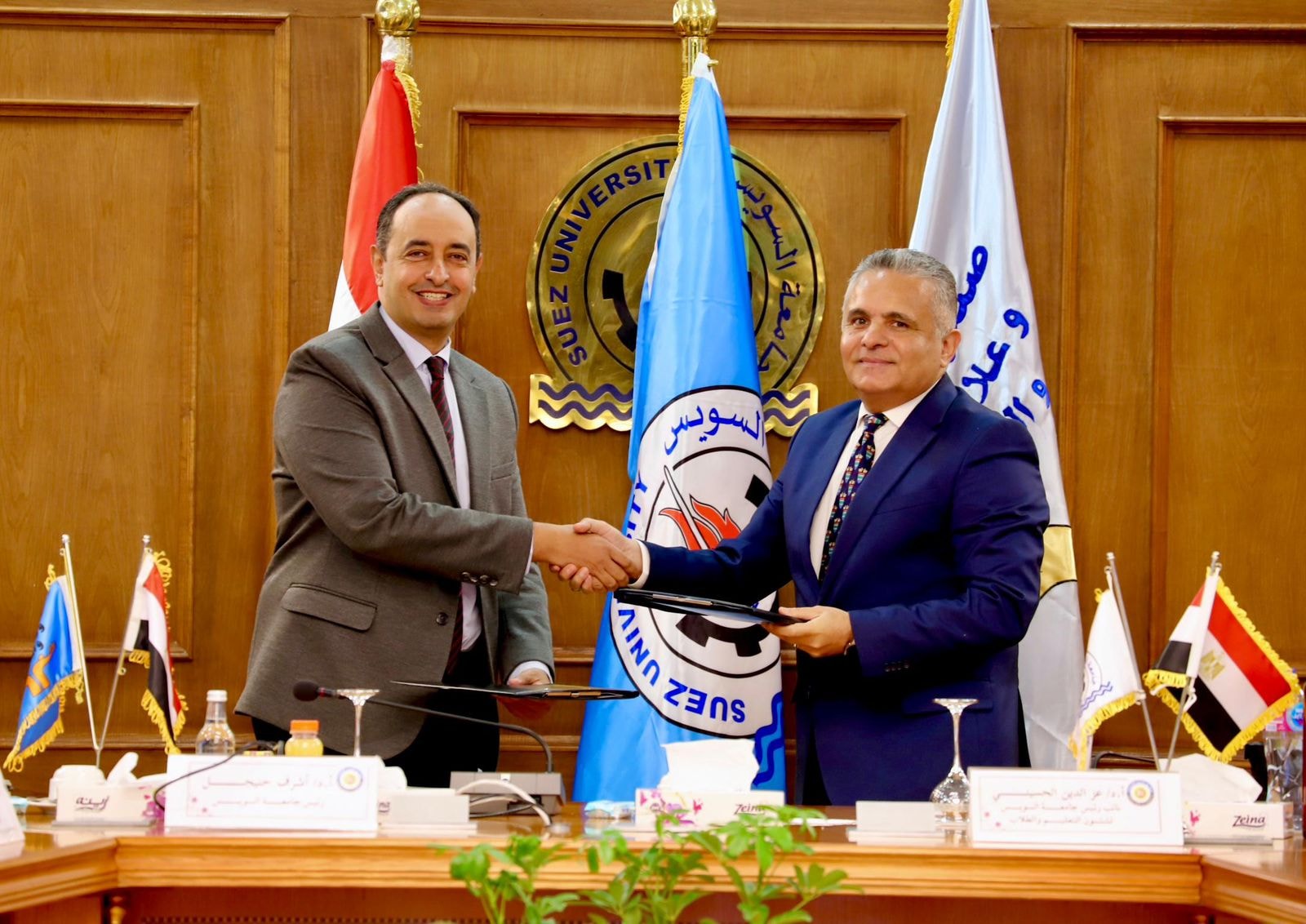
The Director of the Anti-Addiction Fund and the SU President sign a co-operation protocol to open a new branch of the Fund's hotline for the first time in the governorate to treat addiction patients free of charge.
Dr. Amr Othman: The hotline branch aims to provide services to about 3000 addiction patients annually from Suez governorate and neighboring governorates in cooperation with the Faculty of Medicine.
Providing Hepatitis B, C, and HIV analyses for patients at risk of infection, such as injecting drug users.
Statement issued by the Fund for Combating and Treating Addiction and Substance Abuse:
In continuation of the implementation of the national strategy to combat drugs and reduce the risks of abuse and addiction that was launched under the auspices of His Excellency the President of the Republic and is being implemented in cooperation with the concerned ministries and authorities, Dr Amr Osman, the Director of the Fund for Combating and Treating Addiction and Abuse, signed a cooperation protocol with Dr Ashraf Hnijal, the SU President, to open a new branch of the hotline for the Addiction Control Fund "16023" and operate medical clinics at the SU Faculty of Medicine for the first time to treat addiction patients in Suez Governorate. It was attended by Dr. Mostafa Refaat, the Secretary General of the Supreme Council of Universities, and Mr. Medhat Wahba, the Higher Counsellor.
The cooperation protocol aims to provide all treatment services to patients of the "16023" hotline free of charge and in accordance with international standards. The clinics aim to provide services to approximately 3000 addiction patients annually from Suez and neighboring governorates, in addition to providing infectious virus analyses for addiction patients "Hepatitis B, C and HIV" for groups at risk of infection, such as injecting drug users or as determined by the specialist doctor, in addition to liver function analyses.
Training and qualification courses will also be organized for psychiatrists and psychologists working in the field of addiction treatment at the SU Faculty of Medicine, and these courses include theoretical and teaching components, and practical training on the mechanisms of combating and treating addiction, according to the training programs approved between the Fund and the University, as well as allocating a "Volunteer House" headquarters for the Fund to implement many activities and programs to raise students' awareness of the dangers of abuse and addiction to narcotic substances and respond to students' inquiries regarding the issue of abuse and addiction, and explain the work of the addiction treatment hotline "16023".
Moreover, Dr Amr Othman, the Director of the Fund for Combating and Treating Addiction and Substance Abuse, said that one of the axes of action of the National Strategy for Combating Drugs and Reducing the Risks of Abuse and Addiction. It was launched under the auspices of the President of the Republic. It is being implemented in cooperation with the relevant ministries and authorities, providing treatment and rehabilitation services to addicted patients in all governorates across the Republic and per the cooperation protocol with Suez University, where Suez is one of the underserved governorates. All treatment services will be provided to addicted patients from the governorate free of charge and in complete confidentiality, bringing the number of governorates benefiting from the presence of addiction treatment centers and clinics to 20 governorates through 35 treatment centers affiliated with the Fund or in partnership with the hotline, which so far provide treatment services to addiction patients.
Therefore, Dr. Amr Osman pointed out that the Anti-Addiction Fund is keen to implement the rehabilitation program through its Azima Centers, after the completion of treatment for addiction patients. The program focuses on providing structured treatment sessions for patients during the rehabilitation period, in a way that ensures providing the minimum number of therapeutic experiences and information that helps them achieve recovery, by focusing on "therapeutic culture, change, skills needed for recovery and living a healthy life free of drugs". A range of services and activities is also provided in a continuum of community-based care based on the patient's needs (psychological rehabilitation services, aftercare services, relapse prevention, vocational and social rehabilitation, and community reintegration) as part of the commitment to provide free post-treatment services.
As well, Dr. Amr Osman explained that the rehabilitation program at the Azima Centers of the Anti-Addiction Fund is based on "integrating a set of rehabilitation programs" consisting of psychological rehabilitation, cognitive-behavioral therapy, relapse prevention skills program, vocational rehabilitation "work therapy", physical rehabilitation "sports therapy", daily recreational activities, as well as community integration by providing loans to finance projects for recovering people within the economic empowerment initiative in cooperation with Nasser Social Bank, as part of providing services after free treatment and community integration for recovering people.