 Login


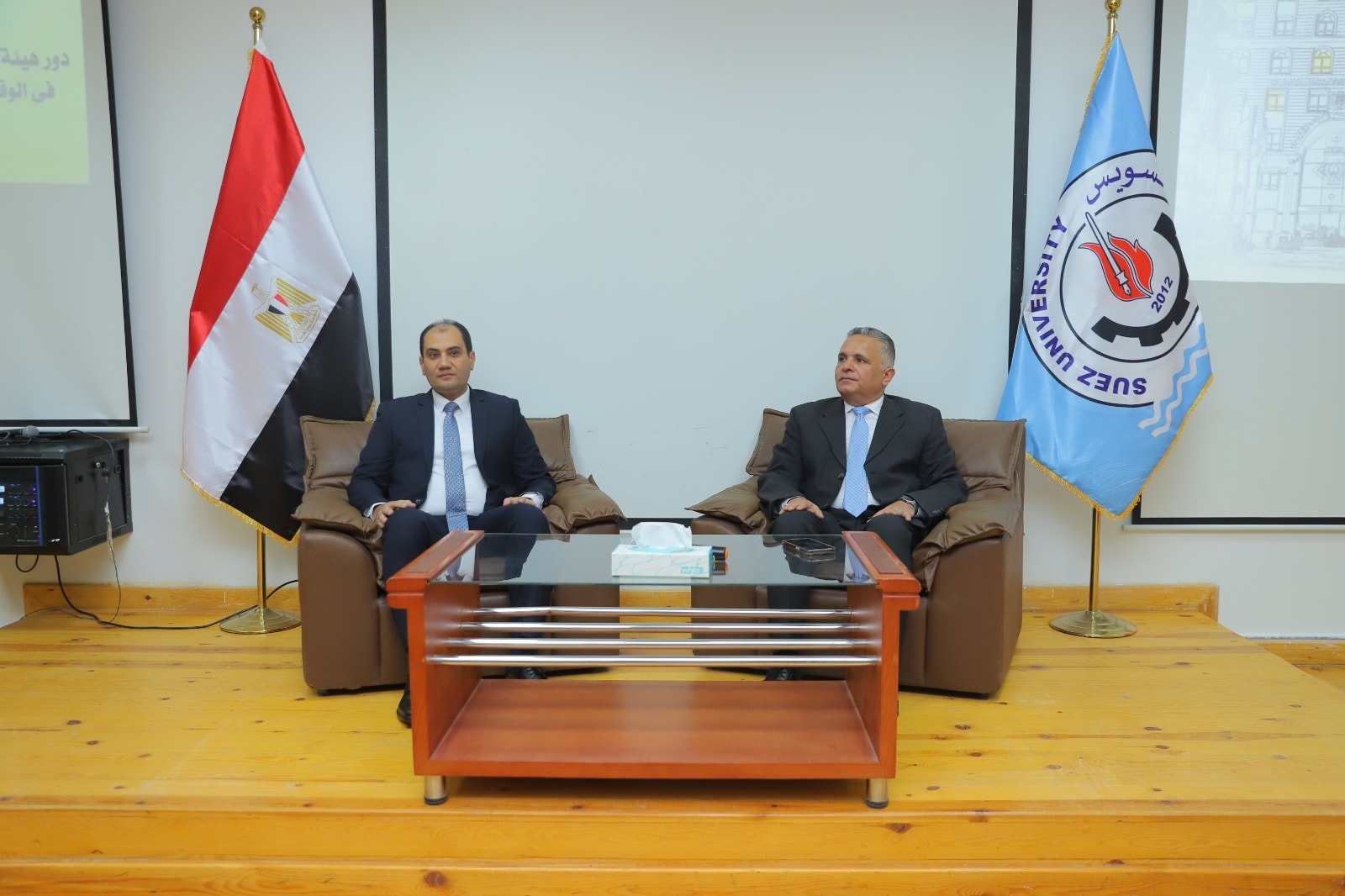
As part of the unified training program for university leaders and the preparation of candidates for the position of dean, Suez University organized an awareness seminar titled “National Issues and Combating Corruption.” The event was held under the patronage of Prof. Dr. Ashraf Heniegal, President of Suez University, and featured a keynote lecture by Major General Mohamed Talaat, Director of the Administrative Control Authority office in Suez Governorate. The seminar was supervised by Prof. Dr. Ehab Shehata, Dean of the Faculty of Education and Director of the Faculty Development Center, and attended by a distinguished gathering of deans, vice-deans, and faculty members from various colleges. The initiative reflects the university’s ongoing efforts to promote a culture of integrity and strengthen national awareness among academic leaders.
Prof. Dr. Ashraf Heniegal emphasized that this seminar reflects the university’s commitment to instilling anti-corruption values across all sectors of the institution, especially among university leadership, given its profound impact on the advancement and preservation of nations. He added that raising awareness of the dangers of corruption and the mechanisms to confront it is a fundamental step toward building strong, effective institutions capable of fulfilling their national role with efficiency and responsibility.
Major General Mohamed Talaat opened his lecture by defining the concept of corruption, presenting its various legal, administrative, and societal interpretations. He explained that corruption is not limited to bribery or illicit gain, but encompasses all forms of deviation from ethical and professional standards that harm the public interest and obstruct development.
He then discussed the types and classifications of corruption, highlighting the differences between financial, administrative, and behavioral corruption, and stressing that each type requires distinct detection and treatment mechanisms. This, he noted, necessitates institutional integration and cooperation among the relevant authorities for effective confrontation.
Talaat went on to outline the efforts of the Administrative Control Authority in combating corruption, pointing to the establishment of the National Anti-Corruption Academy as a training platform aimed at enhancing the competencies of professionals in this field and fostering a culture of integrity and transparency within state institutions.
He also reviewed the National Anti-Corruption Strategy, launched by the President of the Republic and extending to 2030, which unfolds in several phases to create a comprehensive national framework for combating corruption. This includes developing legislation, spreading awareness, and strengthening oversight and accountability mechanisms.
The lecture further covered a range of corruption-related crimes such as illicit gain, money laundering, bribery, extortion, and abuse of power. Talaat explained the legal procedures for addressing these crimes, methods of evidence gathering, and the importance of adhering to proper investigative processes to ensure justice and deterrence.
A series of documentary videos showcasing real corruption cases were screened, demonstrating how events and facts are connected and how physical and digital evidence is used to uncover crimes. Emphasis was placed on the importance of proper documentation practices to ensure that crimes can be legally proven before judicial authorities.
Major General Talaat concluded the seminar with a detailed explanation of how to report corruption cases, outlining the official channels available for filing reports, guaranteeing confidentiality, and encouraging citizens and employees to play an active role in exposing corruption as partners in protecting national resources and safeguarding public funds.