 Login


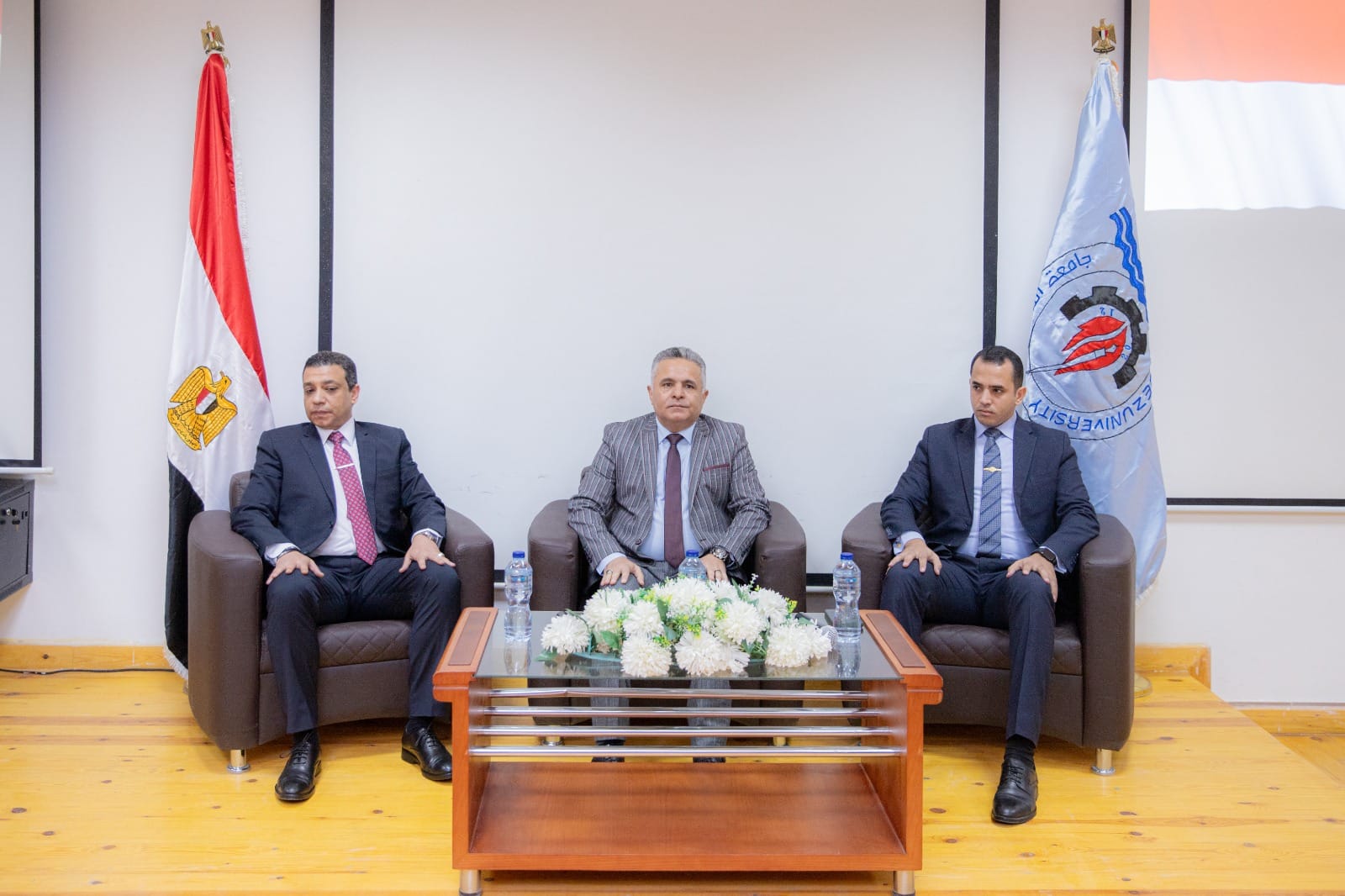
As part of the celebration of International Anti-Corruption Day, a seminar was held in the Petroleum and Mining Engineering Faculty Auditorium, with the presence of Prof. Dr. Ashraf Hnijal, the President of Suez University, Major General Ahmed Diwan, the Director of the Administrative Control Authority Office in Suez, Lieutenant Colonel Youssef Tantawy, a member of the Administrative Control Authority Office in Suez, along with the university's vice presidents, deans of faculties, teaching staff members, university employees, and students. This event began with the national anthem, followed by a speech from the university president, who expressed his pleasure and the entire university's happiness at hosting this seminar, addressing one of the country's most critical issues. He pointed out that corruption in any society can hinder progress and negatively impact development, the efforts of people and governments, and the pursuit of a dignified life.
Moreover, the university president emphasized that combating corruption is not only a national duty but also a collective responsibility that requires the concerted efforts of everyone. He highlighted the pivotal role of the Administrative Control Authority in fighting corruption in Egypt. He also stated that the authority works to uncover corruption, pursue wrongdoers, and enhance transparency and integrity in all state institutions. He further explained that the authority’s efforts go beyond investigations and prosecutions, extending to raising awareness and educating the public about the dangers of corruption and ways to combat it.
He continued by stating that the Egyptian constitution guarantees human rights, including the right to live in a society free from corruption, where everyone enjoys equal opportunities and social justice without discrimination. From this perspective, everyone has a positive role to play in fighting corruption, whether by reporting corrupt practices or adhering to ethical values in daily life.
Hence, the president of the university referred to the support of President Abdel Fattah El-Sisi, who has expressed his full support for anti-corruption efforts across all state institutions, stressing that there will be no tolerance for any violator or manipulator of Egypt’s resources. The president added that all necessary legal measures are being taken to ensure accountability for anyone attempting to harm the interests of the nation and its citizens.
This strong support for anti-corruption efforts reflects the political leadership’s awareness of its importance in achieving the country's sustainable development plan, contributing to the building of a better future for future generations. The significant achievements Egypt has made in recent years across various sectors call for the preservation of these gains, which requires vigilance and collective action to ensure that Egypt remains a model of integrity and transparency.
The university president then outlined some of the strategic initiatives adopted by the Administrative Control Authority in the fight against corruption, including the launch of the National Anti-Corruption Strategy (2023-2030), cooperation with various bodies, and public awareness and education, in addition to international cooperation.
He also emphasized that as one of the country's institutions, Suez University plays an important role in the fight against corruption through various activities and efforts, such as organizing seminars and workshops, training university staff and students, and participating in the national strategy.
The university president concluded his speech by extending his appreciation to all members of the Administrative Control Authority for their significant efforts in safeguarding the nation’s resources and ensuring a brighter future for Egypt.
Following this, Major General Ahmed Diwan, the Director of the Administrative Control Authority Office in Suez, addressed the attendees. He thanked the university president and the entire university community, explaining the authority’s roles, the concept of corruption, and its various forms, including abuse of power for personal gain and bribery.
He then discussed the negative impacts of corruption, particularly the flight of capital, economic stagnation, reduced exports, and social consequences such as crime, terrorism, and unemployment. He also highlighted the dangers of money laundering and illicit enrichment. Furthermore, he mentioned other bodies responsible for fighting corruption, including the legislative, executive, and judicial authorities.
The Director of the Suez office explained that one of the authority’s roles is to investigate the causes of inefficiencies in work and production, uncover flaws in systems that hinder the smooth operation of public institutions, and ensure that laws and regulations are being properly implemented. He also discussed the authority's role in uncovering administrative, financial, and criminal violations, as well as monitoring what is published in newspapers and presented by the media on this subject.
He also highlighted the newly introduced functions of the authority, such as the management of investment support, and the role of Egypt's information infrastructure, competence bank, and leadership nominations. He explained that the authority’s jurisdiction includes public funds, public employees, and institutions, as well as entities operating in the public interest.
Major General Diwan elaborated on the authority's powers, which include investigating and addressing crimes, reviewing and securing files, imposing temporary suspensions, interviewing witnesses, and imposing disciplinary sanctions.
A documentary film summarizing the authority’s functions, including new responsibilities such as combating human trafficking and cybercrimes, was shown.
The seminar concluded with the presentation of a commemorative plaque by Prof. Dr. Ashraf Hnijal to Major General Ahmed Diwan, in appreciation of the authority’s role in preserving the nation’s resources. The event ended with a photo session.