 Login


Suez University's Technology and Education Students Acquire Underwater Welding Skills During Summer Training
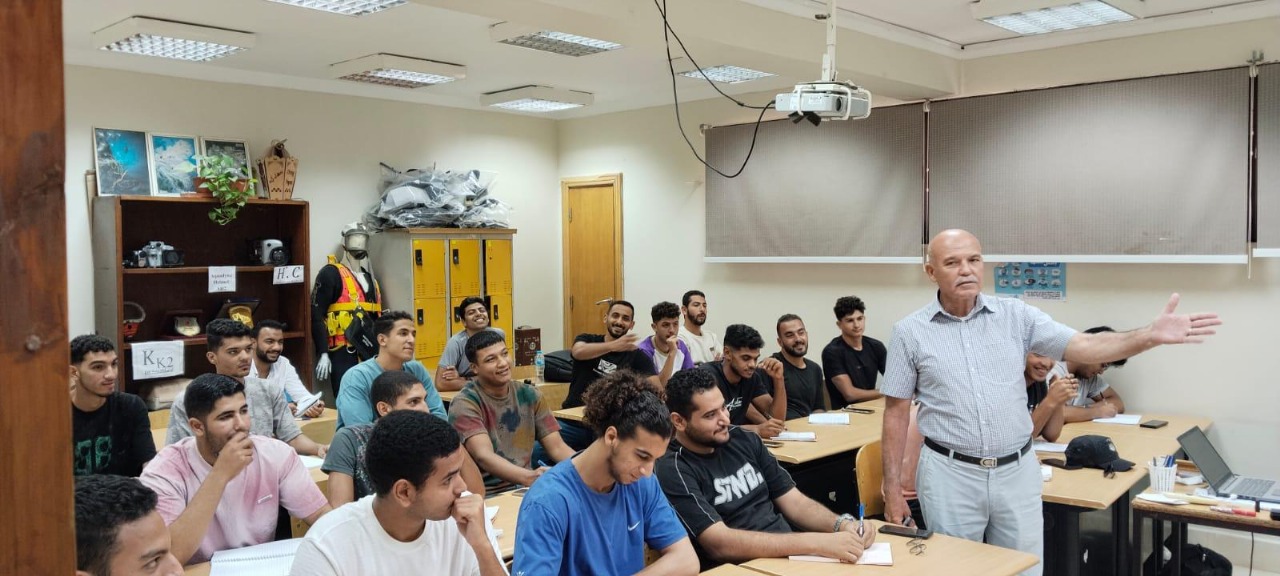
Suez, August 3, 2025 - In an effort to provide practical and advanced educational experiences, students from the Welding Technology Program at the Faculty of Technology and Education, Suez University, are continuing their exceptional summer training in underwater welding. This program, organized in collaboration with the Arab Academy for Science, Technology & Maritime Transport, aims to equip students with the commercial diving skills necessary to perform welding operations in aquatic environments.
The training commenced on July 14, 2025, and the initial three weeks have focused intensively on both theoretical and practical aspects.
Week 1: Fundamentals of Diving Physics
During the first week, students were introduced to diving physics, where they studied critical physical laws governing underwater movement, such as Charles', Boyle's, and Gay-Lussac's Laws, in addition to Dalton's, Henry's, and Archimedes' Principles. The week concluded with a theoretical exam to assess the students' grasp of these foundational concepts.
Week 2: Swimming Skills and Emergency Procedures
The second week of training saw the initiation of swimming drills using fins and masks, which are fundamental for controlling movement underwater. Students also delved into vital theoretical subjects including diving physiology and diseases, the decompression chamber, and dive tables, which are used to solve decompression sickness problems. Comprehensive exams were conducted in these subjects to ensure students understand how to handle emergencies.
Week 3: Practical Exercises and Supplementary Subjects
The third week concentrated on applying the acquired skills. Students practiced essential swimming techniques, such as clearing a mask of water at depth and swimming long distances (40-50 meters) on a single breath. Theoretical coursework included first aid, with practical training in cardiopulmonary resuscitation (CPR), as well as underwater communication methods, where students learned how to effectively communicate with the surface team using both wired and wireless devices.
To be continued...
This summer training is a significant step in preparing students from the Welding Technology Program to become qualified underwater welding specialists, thereby opening up broad professional opportunities in both local and international job markets.